
Questions this page answers
- 1.What does Treasure Island allow for short-term rentals?
- 2.Which zoning districts allow short-term rentals in Treasure Island?
- 3.What counts as a change of occupancy?
- 4.Why is Treasure Island allowed to ban short-term rentals in some zones?
- 5.Do you need a permit to run a short-term rental in Treasure Island?
- 6.How is Treasure Island enforcing its rental rules in 2026?
- 7.Which state and county rules also apply?
- 8.How much tourist demand does Treasure Island have?
…and 2 more sections below.
Can you Airbnb a home or condo in Treasure Island, Florida? Only in certain zones. The city permits tourist dwellings, its term for short-term rentals, in the CG, RFM-30, RFH-50, PR-MU Core and PR-MU Gulf Boulevard districts. They are not permitted in RU-75, the single-family district, or RM-15, which the city labels multi-family.
The zone decides the deal. Two properties a few blocks apart can sit in different districts and follow opposite rules.
I'm a broker and an Airbnb Superhost, and I own and manage short-term and furnished rentals. Treasure Island writes its own code. What applies in St. Petersburg or in St. Pete Beach, the next city south, does not apply here.
What this covers
- What does Treasure Island allow for short-term rentals?
- Which zoning districts allow short-term rentals in Treasure Island?
- What counts as a change of occupancy?
- Why is Treasure Island allowed to ban short-term rentals in some zones?
- Do you need a permit to run a short-term rental in Treasure Island?
- How is Treasure Island enforcing its rental rules in 2026?
- Which state and county rules also apply?
- How much tourist demand does Treasure Island have?
- What should a buyer check before closing on a Treasure Island rental?
What does Treasure Island allow for short-term rentals?
Treasure Island allows short-term rentals, called tourist dwellings, only in five zoning districts: CG, RFM-30, RFH-50, PR-MU Core and PR-MU Gulf Boulevard. City code does not permit them in RU-75 or RM-15. In the five allowed districts there is no limit on how often guests change (City of Treasure Island, Short Term Rental Information).
The city's page also says when it will presume a property is a tourist dwelling. In its words, the city presumes a property to be a tourist dwelling if:
- The property is in an RU-75 or RM-15 zoning district and is publicly offered or advertised for rental.
- The property is in the RU-75 (single-family) district and has more than two changes of occupancy in a 12-month period.
- The property is in the RM-15 (multi-family) district and has more than five changes of occupancy in a 12-month period.
Do not read the counts as a safe allowance. Trigger 1 has no count at all: an advertised rental in RU-75 or RM-15 is enough for the presumption. The page is also not fully consistent. It says tourist dwellings are not permitted in those districts, yet it describes the zoning map as showing "the number of times structures/units may be rented in 12 months." If you are counting on any short stays in RU-75 or RM-15, get the city's answer in writing first.
The page does not say whether a listing for a long-term lease counts as being "publicly offered/advertised for rental." If you plan to rent a home in RU-75 or RM-15 to a long-term tenant, ask the city how it treats that listing before you post it.
Which zoning districts allow short-term rentals in Treasure Island?
Five districts allow tourist dwellings: CG, RFM-30, RFH-50, PR-MU Core and PR-MU Gulf Boulevard. Two do not: RU-75, the single-family district, and RM-15, which the city labels multi-family. That split comes straight from the city's rental page.
| Zoning district | Tourist dwellings (short-term rentals) | When the city presumes a tourist dwelling |
|---|---|---|
| RU-75 (single-family) | Not permitted | Advertised for rental, or more than 2 changes of occupancy in 12 months |
| RM-15 (multi-family) | Not permitted | Advertised for rental, or more than 5 changes of occupancy in 12 months |
| CG | Permitted | No limit on changes of occupancy |
| RFM-30 | Permitted | No limit on changes of occupancy |
| RFH-50 | Permitted | No limit on changes of occupancy |
| PR-MU Core | Permitted | No limit on changes of occupancy |
| PR-MU Gulf Boulevard | Permitted | No limit on changes of occupancy |
Source: City of Treasure Island, Short Term Rental Information, checked October 27, 2026.
To find a parcel's district, the city links to its online zoning map. The city's zoning page also lists ordinances from 2023 to 2025 that are not yet in the online code. Before you lean on the map, email zoning@mytreasureisland.org and ask the city to confirm the district for that address.
The Pinellas jurisdiction table lines Treasure Island up against the county's other cities.
What counts as a change of occupancy?
A change of occupancy happens each time a new paying guest or group moves into the unit, no matter how long they stay. The city's page cites Sec. 68-2 of its code for this. Paid short-term rentals and platform bookings such as Airbnb and VRBO all count.
The city's definition, in its words: a change of occupancy "occurs each time a dwelling unit is occupied by a new transient guest or group in exchange for compensation (rent, fees, or any other form of consideration), or as part of any commercial lodging arrangement."
One kind of stay does not count. Unpaid stays by the owner's immediate family or personal guests are left out, as long as there is no advertising, no rental agreement and no commercial element.
That last part matters for owners who let friends use a unit. If money changes hands or the stay was booked through a listing, the city counts it.
Why is Treasure Island allowed to ban short-term rentals in some zones?
Its core rule predates the state's 2011 cutoff. Florida law blocks local rules that ban vacation rentals or set how long or how often they rent, but rules adopted on or before June 1, 2011 are exempt (section 509.032(7)(b), Florida Statutes). A 2008 federal appeals court opinion quotes the city's tourist dwelling rule from its 1997 code. Whether later amendments keep that exemption is a question for a Florida land use attorney.
The key line in the statute is short. The limit "does not apply to any local law, ordinance, or regulation adopted on or before June 1, 2011."
A federal court opinion puts the rule on the record long before 2011. In 2008, the U.S. Court of Appeals for the Eleventh Circuit decided a case over the city's rule, Schwarz v. City of Treasure Island. The opinion quotes Sec. 68-2 of the city's code from 1997. It describes the rule as barring tourist dwellings in RU-75 and RM-15 and calls it the "occupancy-turnover rule."
That timing is what the statute's exemption for older local rules turns on. Cities that first wrote rental limits after June 1, 2011 do not get it. One caution: the definition on the city's page today names Airbnb and VRBO, so the wording has been updated since 2011, and the zoning page lists 2024 changes to Chapter 68.
Do you need a permit to run a short-term rental in Treasure Island?
The city's rental page lists no separate rental permit or registration program. It does require a City of Treasure Island Local Business Tax if you advertise a unit for rent or rent it for payment. Short stays can also need a state DBPR license, and the Pinellas County tourist development tax applies to them.
The city's page sets out three steps for any owner who rents a dwelling unit:
- Get the state lodging license from the Florida DBPR.
- Pay the annual City of Treasure Island Local Business Tax. The city bases the tax on the number of units rented.
- Pay the Pinellas County tourist development tax, which applies to stays of six months or less.
Paying all three still leaves RU-75 and RM-15 off limits. A tax receipt is not a zoning approval.
How is Treasure Island enforcing its rental rules in 2026?
The city is adding staff and software. Its August 19, 2026 newsletter says it is hiring two more code enforcement officers and will use Deckard Technologies, a platform that scans rental listing sites daily and matches listings to addresses (City of Treasure Island newsletter).
The Tampa Bay Beacons reported on July 28, 2026 that the city's code push has more than doubled the cases sent to its special magistrate. A chart the city manager presented showed 52 cases since October 2025, compared with 24 from 2021 through September 2025. Those totals cover all code cases, not only rentals.
On rentals, the city's code compliance supervisor, James Dixon, told commissioners that new software flags how many times a property changes occupants over 12 months, without relying on listings or reviews. He said that is aimed at the RU-75 and RM-15 districts. A preliminary review found "there's a surplus of them," he said.
The same report covers what happens to unpaid fines. Dixon said unpaid rolling fines generally must be settled when a property changes owners. Fines can become liens. For a buyer, that makes the seller's code history part of the price.
Which state and county rules also apply?
Treasure Island's zoning is only the first test. Florida's DBPR licenses vacation rentals that are rented more than three times a calendar year for under 30 days or one calendar month, or that are held out as regularly rented. Stays of six months or less generally carry 13% in taxes: 6% state sales tax, a 1% Pinellas surtax and a 6% county tourist tax.
The state license. DBPR's vacation rental guide sets the trigger. An entire unit rented more than three times in a calendar year for less than 30 days or 1 calendar month, whichever is less, needs a license. A unit "advertised or held out to the public as a place regularly rented to guests" needs one too. Keep in mind the two clocks. The city counts changes of occupancy over 12 months, while DBPR counts by calendar year.
Condos and houses get different license types. Pinellas falls in DBPR District 3. Licenses there renew February 1, and a half-year fee applies from August 1. For one rental unit, expect a $50 application fee and a $10 education fee, plus $170 for a full year or $90 for a half year. A building of three or more stories also needs a balcony inspection certificate every three years. The exception is when the balconies and stairs are condo common elements. If your condo building has three or more stories, ask the association for its latest certificate.
Taxes on each stay. Under section 212.03, Florida Statutes, the state taxes rentals of living quarters at 6%. A bona fide written lease for continuous residence longer than 6 months is exempt. The Florida DOR surtax table (DR-15DSS) lists a 1% Pinellas surtax. On top of both, the county charges a 6% tourist development tax on stays of six months or less.
The Pinellas County Tax Collector notes that Airbnb has collected the tourist tax on bookings since December 1, 2015, and VRBO since October 1, 2018. If no platform collects, as with a direct booking, the owner owes the tax. Owners must keep three years of records.
The county program. The county's own rental program, with its Certificate of Use, covers unincorporated Pinellas only. Treasure Island is an incorporated city, so that program is not part of the checklist here.
Our Pinellas County Airbnb taxes guide covers filing in more depth.
| Rule | Set by | Effect on a Treasure Island rental |
|---|---|---|
| Zoning | City of Treasure Island | Decides if a tourist dwelling can operate on the parcel at all |
| Local Business Tax | City of Treasure Island | Due once you advertise or rent a unit for payment; priced by unit count |
| Vacation rental license | Florida DBPR | Due past three short rentals a calendar year, or if held out as regularly rented |
| Sales tax and surtax | Florida (6%) and Pinellas surtax (1%) | 7% unless a bona fide written lease runs past 6 months |
| Tourist development tax | Pinellas County | 6% on stays of six months or less |
How much tourist demand does Treasure Island have?
From February through July 2026, Treasure Island's monthly tourist tax collections ranged from $296,781.79 to $495,208.57, based on Pinellas County Tax Collector reports. Hotels and private rentals are lumped together, so read the numbers as a demand signal, not a forecast for one unit.
| 2026 | Treasure Island tourist tax collected |
|---|---|
| February | $336,589.74 |
| March | $495,208.57 |
| April | $373,238.10 |
| May | $296,781.79 |
| June | $299,100.44 |
| July | $302,572.54 |
Source: CVB report tables on the Tax Collector's tourist tax page.
These are collection months, and a collection can land a month or more after the stay. March was the highest month in this stretch. May through July each came in near $300,000. If you underwrite a unit in an allowed district, build that seasonal drop into your numbers.
What should a buyer check before closing on a Treasure Island rental?
Check the zoning district first, then the condo or HOA rental rules, the seller's code and lien history, open permits, flood risk, homestead status and the tax and license accounts. A listing description is not a zoning decision, and a unit in RU-75 or RM-15 cannot legally operate as a tourist dwelling.
- Confirm the district. Look the address up on the city's map and get the city to confirm it by email. CG, RFM-30, RFH-50, PR-MU Core or PR-MU Gulf Boulevard is the only path to short-term rentals.
- Get the condo or HOA rules in writing. Even in RFH-50 or CG, a building can require 30 days, 90 days or more per lease, or cap rentals per year. The association can be stricter than the city. If the building runs its own rental desk, read that agreement too.
- Get the paper trail. Ask the seller for booking history, leases and any notice from code compliance. Order a lien search and ask the city for the code case file while you can still walk away. Fines that were never paid can follow the address. Our guide to what transfers when you buy an operating Airbnb covers which licenses, bookings and accounts carry over.
- Check open permits and storm repairs. The city's newsletter warns that an open permit plus new storm damage can combine toward the 50% Substantial Damage threshold. The Beacons report says the city is also tracking repairs done without permits. Ask the city for the permit history of the address.
- Price the flood risk. The whole city sits on a barrier island. Before you make an offer, get the FEMA zone, the elevation certificate and a real insurance quote. Our Pinellas County flood zone guide shows how to read each one.
- Plan for homestead. The city's page warns that an owner who rents out a dwelling, or does not live there full-time, may not qualify for the homestead exemption. Ask the Pinellas County Property Appraiser before you count on it.
- Set up the accounts early. The city business tax, the county tourist tax account and any DBPR license should be in place before the first guest arrives.
St. Pete Beach, across Blind Pass to the south, works differently. It allows stays under 30 days only in two areas, and even there just 3 times per 12 months. Our St. Pete Beach Airbnb rules guide has that city's zone table.
Sources
Each link below was opened and checked on October 27, 2026.
- Treasure Island short-term rental information and zoning page, City of Treasure Island
- Treasure Island zoning map, linked from the city's rental page
- City newsletter of August 19, 2026
- Schwarz v. City of Treasure Island (11th Cir. 2008)
- Fla. Stat. 509.032 and Fla. Stat. 212.03, 2026 editions
- DR-15DSS surtax rates for 2026, Florida Department of Revenue
- DBPR vacation rental licensing guide
- Pinellas tourist development tax and county STR program, Pinellas County
- Tourist tax collections and platform rules, Pinellas County Tax Collector
- Treasure Island code compliance report, Tampa Bay Beacons, July 28, 2026 (news)
This page is general real estate education. It is not legal, tax or insurance advice. Zoning, licensing rules, tax rates, flood maps and condo bylaws can all change. Before you buy or rent, have the City of Treasure Island, Florida DBPR, the Pinellas County Tax Collector, your association and your own attorney or CPA confirm what applies to the address. Facts on this page were checked October 27, 2026.
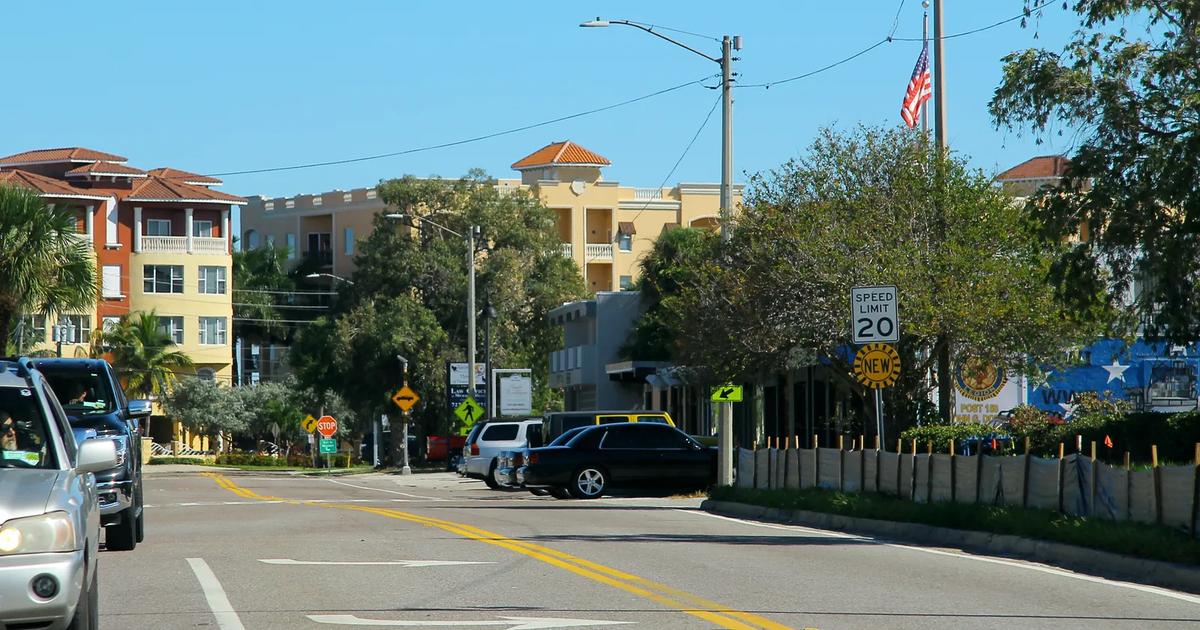
Cover photo: 108th Avenue, Treasure Island by formulanone, under a CC BY-SA 2.0 license. We cropped and resized it, and share the edited image under the same CC BY-SA 2.0 license.