
Questions this page answers
- 1.What does St. Pete Beach allow for short-term rentals?
- 2.Which zones allow short stays in St. Pete Beach?
- 3.Why can St. Pete Beach limit rentals when most Florida cities cannot?
- 4.Do you need a permit for a short-term rental in St. Pete Beach?
- 5.How does the city enforce the 3-stay limit?
- 6.What state and county rules apply on top of the city?
- 7.How busy is the St. Pete Beach rental market?
- 8.What should you check before you buy a rental in St. Pete Beach?
…and 1 more section below.
Can you Airbnb a home or condo in St. Pete Beach? Only in a narrow way. The city allows stays under 30 days up to 3 times in a 12-month period, and only in the RM zoning district and the Pass-A-Grille Overlay District. In the rest of the city, short stays in homes are not allowed.
Rentals of one month or more are allowed in all homes citywide. For most buyers, that makes monthly rentals the real plan, and the zoning map decides the rest.
I'm a broker and an Airbnb Superhost, and I own and manage short-term and furnished rentals. St. Pete Beach is a separate city on the barrier island, with its own code. The rules in the city of St. Petersburg do not carry over, and neither do the beach rules in the towns next door.
What this covers
- What does St. Pete Beach allow for short-term rentals?
- Which zones allow short stays?
- Why can St. Pete Beach limit rentals when most Florida cities cannot?
- Do you need a permit for a short-term rental in St. Pete Beach?
- How does the city enforce the 3-stay limit?
- What state and county rules apply on top of the city?
- How busy is the St. Pete Beach rental market?
- What should you check before you buy a rental here?
What does St. Pete Beach allow for short-term rentals?
Short stays are tightly limited. Stays under 30 days are allowed up to 3 times per 12-month period, and only in the RM district and the Pass-A-Grille Overlay District. Rentals of one month or more are allowed in all homes in the city (City of St. Pete Beach, Short Term Rental Rules & Regulations).
The city's page sets out four rules:
- Rentals of less than one month are not allowed in many districts.
- Stays of less than 30 days are allowed up to 3 times per 12-month period in the RM district and in the Pass-A-Grille Overlay District.
- Rentals of one month or more are allowed in all homes in the city.
- Permanent transient lodging uses need a business tax license. Zoning and the Fire Marshal review them before the city issues it. A single-family home rented for one month or more does not need one.
Read rule 2 closely. The limit is 3 stays in any 12 months, and only in two areas. A house in a single-family zone gets zero short stays.
The city's page uses both "less than one month" and "less than 30 days." If you plan on monthly stays, set a minimum of at least 30 nights and one calendar month, and ask the city which test applies to your parcel.
Which zones allow short stays in St. Pete Beach?
Only two areas get any stays under 30 days: the RM district and the Pass-A-Grille Overlay, each capped at 3 stays per 12 months. Every other zone on the city's table, including the single-family zones RU-1, RU-2 and RLM-1, allows no stays under 30 days.
The city posts a zone table on that page. Here are the main residential districts from that table. The full table also lists mixed-use and commercial districts that allow some homes (TC-1, CRD-EA, AC, CC-1, CC-2 and B/HC), and every one of them says no to stays under 30 days. The last column is the one rental buyers care about.
| Zone | Single-family homes | Two or more family | Any stay under 30 days | Up to 3 stays per 12 months |
|---|---|---|---|---|
| RU-1 | Yes | No | No | No |
| RU-2 | Yes | No | No | No |
| RLM-1 | Yes | No | No | No |
| RLM-2 | Yes | Yes | No | No |
| RM | Yes | Yes | No | Yes |
| ROR | Yes | Yes | No | No |
| RFM | No | Yes | No | No |
| DCR | Yes | Yes | No | No |
| UBV | Yes | Yes | No | No |
| BR | Yes | Yes | No | No |
| Pass-A-Grille Overlay | Underlying district | Underlying district | No | Yes |
Source: City of St. Pete Beach zone table, last updated October 15, 2020, per the page.
Two points matter. No zone allows open-ended nightly rentals in a home, and only RM and the Pass-A-Grille Overlay get the 3-stay allowance.
The Pass-A-Grille Overlay sits on top of a base zone. A home there follows its base zone for what can be built. It gets the 3-stay allowance from the overlay.
To find a parcel's zone, the city points owners to its official zoning map (PDF) or to the Community Development Department at City Hall. The map the city links to is its 2012 zoning book, adopted by Ordinance 2011-34 and effective July 10, 2012. The zone table on the city's rental page was last updated October 15, 2020. Zoning can change after either date, so ask Community Development to confirm the zone for the exact address before you rely on it.
For how St. Pete Beach compares with the other Pinellas cities, see the Pinellas jurisdiction table.
Why can St. Pete Beach limit rentals when most Florida cities cannot?
Because its rental limits predate Florida's cutoff. State law bars local rules on how long or how often vacation rentals are rented, but it exempts rules adopted on or before June 1, 2011 (section 509.032(7)(b), Florida Statutes). St. Pete Beach had its limits in place before 2011, according to FOX 13 and the Tampa Bay Beacons.
The statute's exact words: a local law "may not prohibit vacation rentals or regulate the duration or frequency of rental of vacation rentals." The same paragraph says this "does not apply to any local law, ordinance, or regulation adopted on or before June 1, 2011."
That is why the city can still cap stays by zone and by count. Many Florida cities that wrote rules after 2011 cannot.
That history shaped a recent decision. The City Commission listed "Short-term Rental Registration" as a discussion item on its August 19, 2026 agenda. FOX 13 reported that commissioners took no vote and did not ask staff to draft an ordinance. They leaned toward enforcing the existing rules and looking at low-cost software to find illegal rentals. City staff said a new ordinance could put the older rules at risk. The Tampa Bay Beacons reported the same outcome.
Do you need a permit for a short-term rental in St. Pete Beach?
St. Pete Beach has no city short-term rental permit or registration as of October 2026. The City Commission discussed a registration program on August 19, 2026 and did not move ahead. Permanent transient lodging needs a city business tax license, and short stays can also need a state DBPR license and a county tourist tax account.
The rules on the city's page are still the rules, and no permit makes a short stay legal in a zone where the table says no.
How does the city enforce the 3-stay limit?
The city's rental flyer lays out how enforcement works (City of St. Pete Beach, All About Short Term Rentals). Code Enforcement has looked into more than 300 short-term rental cases in the last five years. The chart on the flyer counts 304 cases from 2020 to September 2025.
The process, in the city's words and order:
- Investigation. Complaints can come from neighbors, online listings or other sources. Officers review listings, occupancy records and property activity.
- Notice of Violation. If a violation occurs, the city issues a notice. The flyer says each rental event is a completed offense, and fines may be imposed right away. You cannot "un-rent" a property.
- Fines and penalties. Each violation is a separate offense. Fines go up with repeat violations. Unpaid fines may become liens.
- Ongoing monitoring. Repeat cases can lead to higher fines and legal action, and the property may stay under watch.
The per-stay count matters more than any single fine. Ten illegal weekends are ten offenses, not one. A lien can follow the property, so ask for a lien search and the city code case history before your inspection period ends.
The flyer also gives owners plain tips. Know your zoning and limits. Track rental dates so you don't go over. Use monthly minimums if you rent often. Keep leases, logs and cleaning schedules.
What state and county rules apply on top of the city?
Three layers sit on top of the city rules. You need a Florida DBPR vacation rental license if you rent more than 3 times a calendar year for less than 30 days or 1 calendar month, or hold the unit out as regularly rented. Stays of six months or less carry Florida's 6% sales tax, Pinellas County's 1% surtax and the county's 6% tourist development tax. Meeting one layer does not cover the others.
Florida DBPR license. The state's vacation rental guide says you need a license if you rent an entire unit more than three times in a calendar year for less than 30 days or 1 calendar month, whichever is less. You also need one if the unit is "advertised or held out to the public as a place regularly rented to guests" (DBPR vacation rental guide). Note the two counting periods. The city counts any 12 months. The state counts a calendar year. An active online listing may count as holding the unit out to the public, so ask DBPR before you assume you are exempt.
DBPR issues a condo license or a dwelling license, based on the property. Pinellas is in DBPR District 3, with a February 1 renewal date and a half-year fee starting August 1. A new license costs a $50 application fee, a $10 education fee and the license fee, which for a single rental unit is $170 for a full year or $90 for a half year. Buildings of three or more stories need a balcony inspection certificate every three years, unless the balconies and stairs are condo common elements.
Florida sales tax. Florida charges 6% on rentals of living quarters. A bona fide written lease for continuous residence longer than 6 months is not taxed (section 212.03, Florida Statutes). Pinellas County adds a 1% discretionary sales surtax (Florida DOR, DR-15DSS), so with the tourist tax most stays of six months or less carry 13% in total. A monthly furnished rental is still taxed.
Pinellas tourist development tax. Pinellas charges a 6% tourist development tax on places rented for six months or less (Pinellas County, Pay Tourist Development Tax). The Tax Collector says anyone collecting rent for six months or less must register a TD account, collect the tax and remit it. Airbnb collects it for bookings made on or after December 1, 2015, and VRBO on or after October 1, 2018. If a platform does not collect, the owner owes the tax. Records must be kept for three years (Pinellas County Tax Collector).
What does not apply. Pinellas County's short-term rental Certificate of Use program covers unincorporated Pinellas only (Pinellas County STR program). St. Pete Beach is its own city, so the county program does not apply there.
For the full tax picture, including filing and the local surtax, read Pinellas County Airbnb taxes.
| Layer | Who sets it | What it decides for a St. Pete Beach rental |
|---|---|---|
| Zoning and stay limits | City of St. Pete Beach | Whether stays under 30 days are allowed, and how many |
| Business tax license | City of St. Pete Beach | Permanent transient lodging uses; not needed for monthly rentals of a single-family home |
| Vacation rental license | Florida DBPR | Needed past 3 short rentals a calendar year or if held out as regularly rented |
| Sales tax and surtax | Florida (6%) and Pinellas surtax (1%) | 7% on rentals unless a bona fide written lease runs longer than 6 months |
| Tourist development tax | Pinellas County | 6% on rentals of six months or less |
How busy is the St. Pete Beach rental market?
The St. Pete Beach and Tierra Verde area reported $935,629.56 to $1,502,037.64 a month in tourist development tax from February to July 2026, per the Pinellas County Tax Collector. Those totals cover hotels and private rentals together, so they show area demand, not what one home would earn.
| Month (2026) | Tourist development tax collected, St. Pete Beach/Tierra Verde |
|---|---|
| February | $935,629.56 |
| March | $1,502,037.64 |
| April | $1,275,623.21 |
| May | $993,510.25 |
| June | $959,397.68 |
| July | $1,015,799.67 |
Source: Pinellas County Tax Collector, Local Option CVB Reports.
Each figure is the tax collected that month, which can trail the month guests stayed. March collections were the highest in this stretch. June and July each came in near $1 million. If you plan monthly stays, build the season into your numbers.
What should you check before you buy a rental in St. Pete Beach?
Check the parcel first. A listing can say "rental friendly" and still sit in a zone where short stays are not allowed.
- Confirm the zone. Find the parcel on the city zoning map, then ask Community Development to confirm it. RM or the Pass-A-Grille Overlay is the only path to any stays under 30 days.
- Plan around the cap. Even in RM, 3 short stays per 12 months is not a nightly business. Build your numbers on monthly stays and treat the 3 short stays as extra.
- Read the condo or HOA documents. An association can set a longer minimum lease or limit how often units rent. Those rules can be stricter than the city.
- Ask for the seller's records. Request the rental calendar, leases and any code case or Notice of Violation. Get the city code case history and a lien search before your inspection period ends. A past violation can mean fines or a lien. For what does and does not transfer at closing, read what transfers when you buy an operating Airbnb.
- Check flood risk. St. Pete Beach is a barrier island. Pull the FEMA flood zone, ask for an elevation certificate and get an insurance quote before you set a price. The Pinellas County flood zone guide walks through each step.
- Line up the licenses and taxes. Register for the county tourist tax before your first stay of six months or less. Check DBPR if you use any short stays or keep a listing live.
If you are comparing St. Pete Beach with the city of St. Petersburg or Gulfport, the rules differ. Read can you Airbnb in St. Pete or Gulfport for those two cities.
Sources
All checked October 26, 2026.
- City of St. Pete Beach: Short Term Rental Rules & Regulations, All About Short Term Rentals flyer, official zoning map (PDF), August 19, 2026 City Commission agenda
- Florida Statutes 2026: 509.032, 212.03
- Florida Department of Revenue: DR-15DSS, Discretionary Sales Surtax Information for Calendar Year 2026
- Florida DBPR: vacation rental guide
- Pinellas County: Pay Tourist Development Tax, STR program for unincorporated areas
- Pinellas County Tax Collector: Tourist Development Taxes
- News: FOX 13, August 20, 2026, Tampa Bay Beacons, August 25, 2026
Educational real estate information only, not legal, tax or insurance advice. City rules, state licensing, tax rates, flood maps and association documents change. Confirm the exact parcel with the City of St. Pete Beach, Florida DBPR, the Pinellas County Tax Collector, your association and qualified professionals before you buy or rent. Last checked October 26, 2026.
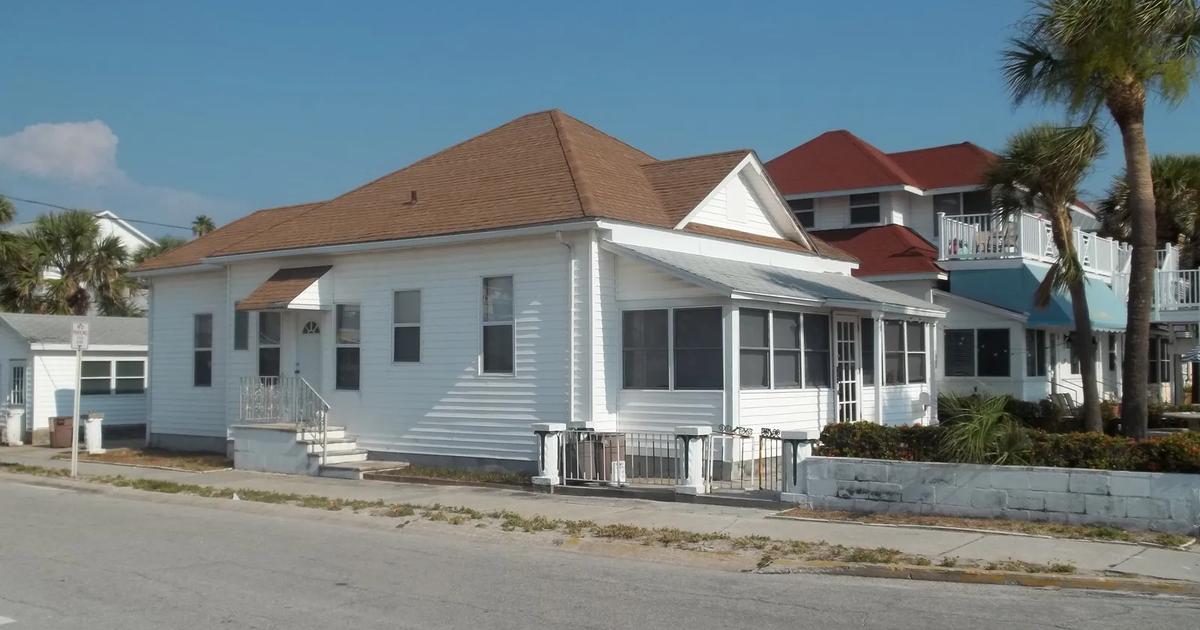
Cover photo: Pass-a-Grille Historic District, St. Pete Beach by Ebyabe, licensed CC BY-SA 3.0. Cropped and resized. This cropped version is also licensed CC BY-SA 3.0.