
Which condos in Indian Shores allow short-term rentals? There is no official list, and the town won't be the one to tell you no. The Town of Indian Shores says it has no rental restrictions and sends owners to their condo association. So the answer is building by building: each condo's declaration, amendments and rules decide whether you can rent by the night, the week or only by the month.
For how Indian Shores compares with the rest of the county, see the Pinellas County short-term rental guide.
The fastest way to narrow it down is to check which buildings already have units holding a Florida vacation rental license, then read that building's documents before you make an offer. I'll walk through both steps below.
I'm Troy Nowak, Broker of Mangrove Bay Realty (BK3436609). I'm an Airbnb Superhost, and I own and manage six short-term and furnished rentals. If you have a building in mind, send me the name and I'll pull its rental rules.
What this covers
- Which Indian Shores condos allow short-term rentals?
- How do I check one building before I buy?
- What does the town allow?
- Is Indian Shores part of Indian Rocks Beach?
- Does Indian Shores require a rental permit or registration?
- What can a condo association restrict?
- What did the October 2026 beach ordinance change?
- Which state and county rules also apply?
- What should a buyer check before buying an Indian Shores rental?
Which Indian Shores condos allow short-term rentals?
The ones whose own documents allow it. That sounds like a dodge, but it is how the rules are built here. The town's Building Department FAQ answers the rental question this way: "The Town of Indian Shores does not have rental restrictions, you will need to contact your condo association or speak to the owner" (Town of Indian Shores FAQ).
Florida's vacation rental preemption limits what a town can do about short stays. It does not limit a condo association (Fla. Stat. 509.032). So two buildings side by side on Gulf Boulevard can have opposite answers. One may welcome weekly guests and run a front desk. The next may require a minimum lease of months and board approval of every tenant.
Be careful with any website that hands you a list of "Airbnb-friendly" Indian Shores condos. Associations amend their rules, and a list that was right last year can be wrong at closing. Treat a list as a place to start asking, not as an answer.
How do I check one building before I buy?
Use two sources: the state's license records to see which buildings already host short stays, and the building's recorded documents to see what is allowed going forward.
- Search Florida's vacation rental database. The Division of Hotels and Restaurants at Florida DBPR publishes a searchable Vacation Rental Database of every licensed vacation rental condo and dwelling address, refreshed daily (DBPR Hotels and Restaurants). Filter to Indian Shores and look for the building's street address. Several licensed units in one building is a good sign the documents allow short stays. It is not proof, because owners can hold a license for a unit their association no longer lets them rent nightly.
- Ask for the recorded declaration and every amendment. Not a summary from the listing agent or the seller. Look for minimum lease terms, a cap on leases per year, tenant approval and any guest registration rule.
- Ask the manager about pending amendments. A rental vote in progress can change the answer after you close.
- Ask whether the building runs an on-site rental program. If it does, get the program agreement and its fees in writing.
- Check the seller's license and history. If the unit rents now, ask for the DBPR license number, the county tourist tax account and the booking history.
If you'd rather not dig through a declaration on your own, I can check a specific Indian Shores building for you. I'll find the documents. A Florida real estate attorney should still read the rental sections for legal effect.
What does the town allow?
The town does not restrict rentals, according to the FAQ quoted above. That is the town's plain answer. It is not a promise that every unit can host nightly guests, because the association and the state still have a say.
Read that answer for what it is. A FAQ is a summary, not the code itself. The town keeps its codified ordinances on Municode, and I could not open that code for this article. If your purchase depends on short stays, ask the town to confirm in writing that nothing in its code limits rentals at your address.
The town is small. Ordinance 2026-03 describes Indian Shores as a barrier island town incorporated in 1949, covering 0.9 square miles in total, of which 0.6 square miles is water, and says "tourism and hospitality are the Town's primary industries" (Ordinance 2026-03).
Rentals also show up in the town's own records. At the July 14, 2026 council meeting, the council approved a site plan for a new single-family home on Gulf Boulevard. The minutes record the owner saying it "will be used as a short-term rental, similar to the adjacent property he owns" (August 19, 2026 agenda packet, which holds those minutes).
Is Indian Shores part of Indian Rocks Beach?
No. Indian Shores is a separate town with its own council, code and building department. Indian Rocks Beach is a different city to the north with its own vacation rental rules and fees. Those rules do not apply in Indian Shores, and the reverse is also true.
The names cause real mistakes. Listings, mailing addresses and rental sites often blur the two. Before you rely on any rule, confirm which town the parcel is in. The Pinellas County Property Appraiser record for the address shows the taxing district.
If the address turns out to be in Indian Rocks Beach, our Indian Rocks Beach Airbnb rules guide covers that city. If it is in unincorporated Pinellas, the county's own program applies. Pinellas County says its short-term rental rules cover unincorporated areas only and that each city sets its own rules (Pinellas County STR program).
Does Indian Shores require a rental permit or registration?
I found no town rental permit or registration program on the town's website, and the town's FAQ says it has no rental restrictions. I could not read the town code itself, so I cannot rule out a code section. Some private websites say the code has a rental registration section with occupancy limits. I could not confirm that from an official source, so get the town's written answer before you close.
Fire safety is worth asking about too. In the May 12, 2026 council workshop minutes, the Fire Chief discussed fire prevention inspections and "enforcement issues involving short-term rental properties operating beyond single-family residential use" (July 14, 2026 agenda packet, which holds those minutes). State law leaves room for that. Section 509.032(7)(a) says the vacation rental preemption does not stop local inspections under the Florida Building Code and Fire Prevention Code (Fla. Stat. 509.032).
What that means for a buyer: a large house rented to big groups may draw fire and building questions even where the town has no rental limit. Ask the seller whether any fire inspection, notice or code case has touched the property.
What can a condo association restrict?
A lot. The town does not limit rentals, but a condo declaration can set minimum stays, cap the number of leases per year, require approval of tenants or ban short stays outright. The state preemption in section 509.032 limits local governments, not associations. In a condo building, the declaration, bylaws and rules usually decide the deal.
Watch one state rule closely. Under section 718.110(13), an amendment that bans rentals or changes how long or how often a unit can be rented applies only to owners who consent to it and to owners who take title after it takes effect (Fla. Stat. 718.110). If a seller tells you the unit is exempt from a rental limit because they owned before it passed, that exemption may not pass to you as the new owner.
Get these in writing before your inspection period ends:
- The recorded declaration and every amendment, not only a summary.
- The current rules on minimum stays, leases per year and guest registration.
- Any amendment the board is drafting or plans to put to a vote.
- Any front desk or rental program agreement, if the building runs one.
Have a Florida real estate attorney read the rental sections. A broker can find the documents, but reading them for legal effect is an attorney's job.
What did the October 2026 beach ordinance change?
On October 13, 2026, the town council adopted Ordinance 2026-03 by a 5 to 0 vote. It recognizes the public's customary use of the dry sand beach, including privately owned dry sand, and it took effect on adoption (Ordinance 2026-03).
The ordinance creates Section 54-7 of the town code. It lists the uses it protects, including walking the beach, sitting, sunbathing, using umbrellas and other shade, picnicking, fishing, swimming and building sand creations. It also keeps a buffer. The public may not use a 15 foot zone seaward of the toe of the dune next to private property, or seaward of a private permanent habitable structure, whichever is farther seaward, except to pass through to a public beach access point. The buffer does not apply to people the owner invites or authorizes, to emergency and government workers, or to areas seaward of the erosion control line or under a recorded public access easement.
For a rental owner, this is mostly about honest listings. If your building sits on the Gulf, guests share the dry sand beyond that buffer with the public. I would not describe an Indian Shores unit as having a "private beach." Check any old listing copy before you take it over.
Which state and county rules also apply?
Three state and county layers apply in Indian Shores no matter what the town does: a state vacation rental license, state sales tax with the county surtax, and the county tourist development tax. Together the taxes come to 13% on stays of six months or less. A bona fide written lease longer than six months is outside the state sales tax.
The license rule comes from Florida DBPR. You need a vacation rental license if you rent a unit more than three times in a calendar year for periods shorter than 30 days or one calendar month, whichever is less, or if you advertise it as regularly rented. A condo unit takes a Vacation Rental Condominium license. A house or building of up to four units takes a Vacation Rental Dwelling license (DBPR vacation rental guide, Fla. Stat. 509.242).
DBPR lists its application and license fees in its guide. Pinellas is in District 3, where licenses renew February 1.
| Rule | Set by | What it means in Indian Shores |
|---|---|---|
| Rental restrictions | Town of Indian Shores | Town FAQ says it has none; confirm the code in writing |
| Rental limits in the building | Condo association | Declaration, bylaws and rules can set minimum stays or caps |
| Vacation rental license | Florida DBPR | Needed past three short rentals a calendar year, or if held out as regularly rented |
| Sales tax and surtax | Florida (6%) and Pinellas surtax (1%) | 7% unless a bona fide written lease runs longer than 6 months |
| Tourist development tax | Pinellas County | 6% on stays of six months or less |
Sources for the tax rows: the 6% state rate and the six month lease rule are in Fla. Stat. 212.03. The 1% Pinellas surtax runs through December 31, 2029, per the 2026 DR-15DSS. The 6% county tax is on the Pinellas tourist development tax page.
The Pinellas County Tax Collector says Airbnb has collected the county tourist tax on its bookings since December 1, 2015, and VRBO and HomeAway since October 1, 2018 (Pinellas County Tax Collector). Direct bookings are still yours to report. Confirm with each platform and the Tax Collector which taxes it collects for your listing.
State law also limits what the town could do. A local law may not prohibit vacation rentals or regulate how long or how often they are rented, unless the rule was adopted on or before June 1, 2011 (Fla. Stat. 509.032). That limit applies to the town. It does not apply to your association.
What should a buyer check before buying an Indian Shores rental?
Start with the address, then the building's documents, then the paper trail. Going by the town's FAQ, the town itself is unlikely to be the obstacle. The association, the license and the building's condition need the closest look.
- Confirm the town. Check the property appraiser record so you know the address is in Indian Shores and not Indian Rocks Beach or Redington Shores.
- Get the condo documents early. Read the declaration, every amendment and the current rules on minimum stays and lease counts. Ask about any amendment in progress, and check the building in the DBPR vacation rental database.
- Ask the town in writing. Email the town and ask whether any code section limits or registers rentals at the address. Keep the reply with your closing file.
- Check the seller's license and tax accounts. DBPR's vacation rental search shows licensed units. Ask for the county tourist tax account and booking history. Our guide to what transfers when you buy an operating Airbnb explains which accounts carry over.
- Ask about fire and code history. Given the council's May discussion, ask whether any fire inspection, notice or code case involves the property.
- Price insurance. Ask the association for its building insurance policies, reserve study and any planned special assessments. The town describes itself as a special flood hazard area (Town Ordinances), so get a written insurance quote before your inspection period ends.
- Fix the listing copy. Remove any "private beach" language once you own it.
Treasure Island, a few towns south, works differently. It allows tourist dwellings only in certain zoning districts. Our Treasure Island Airbnb rules guide has that city's zone table, and the short-term rentals page compares rules across Pinellas.
Thinking about buying or selling an Indian Shores condo that rents short term? Tell me about the unit and I'll help you check the building before you commit.
Sources
Links were opened and checked on October 28, 2026. The town FAQ, DBPR pages and the vacation rental database link were checked again on November 9, 2026.
- Town of Indian Shores FAQ on rental restrictions and Town Ordinances page
- Ordinance 2026-03, Beach Customary Use, adopted October 13, 2026
- Town council agenda packets for July 14, 2026 (May 12 minutes) and August 19, 2026 (July 14 minutes)
- Fla. Stat. 509.032, 509.242, 718.110 and 212.03, 2026 editions
- DR-15DSS surtax rates for 2026, Florida Department of Revenue
- DBPR Vacation Rental Database of licensed vacation rental addresses
- DBPR vacation rental licensing guide and DBPR Hotels and Restaurants
- Pinellas tourist development tax and county STR program, Pinellas County
- Tourist development tax and platform collection, Pinellas County Tax Collector
- Pinellas County Property Appraiser
This page is general real estate education. It is not legal, tax or insurance advice. Town codes, licensing rules, tax rates, flood maps and condo documents can all change. Before you buy or rent, have the Town of Indian Shores, Florida DBPR, the Pinellas County Tax Collector, your association and your own attorney or CPA confirm what applies to the address. Facts on this page were checked October 28, 2026, and the town FAQ and DBPR pages again on November 9, 2026.
If you are buying or selling in Indian Shores, start with the Indian Shores short-term rental page or send the address through the contact form.
The next town south is covered on the Indian Rocks Beach short-term rental page.
For another barrier-island comparison, see Treasure Island short-term rentals.
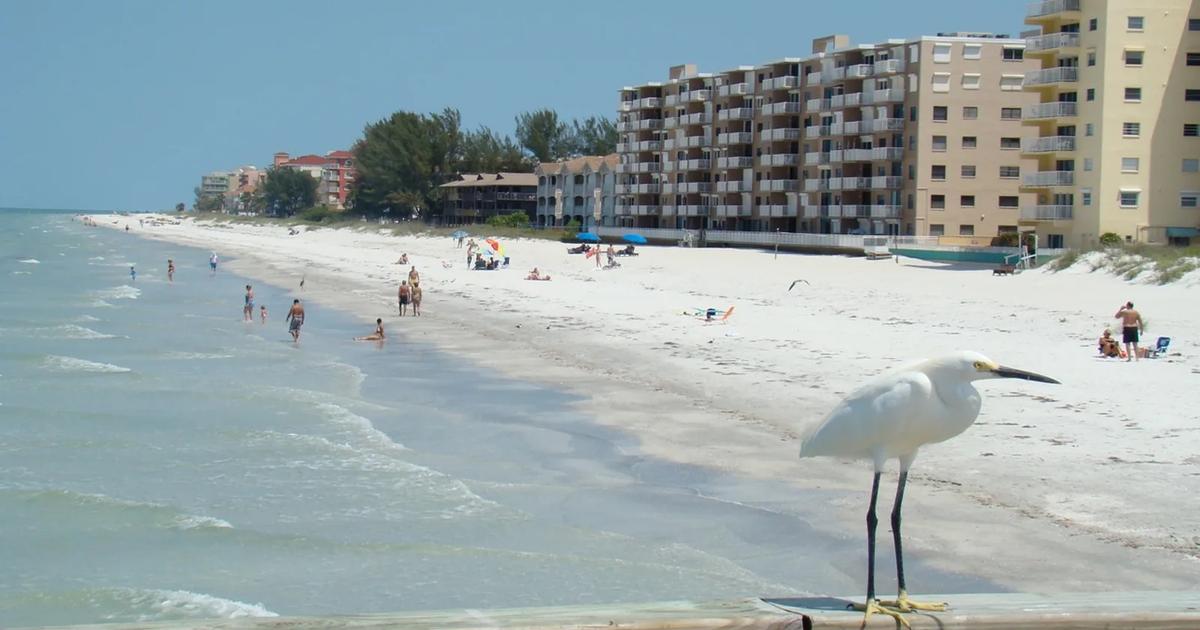
Cover photo: Indian shores, Florida - panoramio by Vaclav Zrno, licensed CC BY 3.0, via Wikimedia Commons. Cropped and resized.