
Questions this page answers
- 1.What does Tarpon Springs allow for short-term rentals?
- 2.Which zones allow short-term rentals in Tarpon Springs?
- 3.Does a tourist home have to be owner-occupied?
- 4.What are the rules in the Resort Residential district?
- 5.How does a conditional use approval work?
- 6.Can you rent a condo short term in Tarpon Springs?
- 7.Which state and county rules also apply?
- 8.How much tourist demand does Tarpon Springs have?
…and 3 more sections below.
Can you run an Airbnb in Tarpon Springs, Florida? Only in certain zones. The city treats any stay of six weeks or less as a short-term rental and allows it only in the zoning districts it lists. Most of those need a conditional use approval at a public hearing. Elsewhere, rentals must run longer than six weeks.
None of the city's posted rules require the owner or a manager to live in the home. The real limits are the zone, the type of home and, in some districts, a 1,200 foot gap from the next approved rental.
I'm a broker and an Airbnb Superhost, and I own and manage short-term and furnished rentals. In Tarpon Springs, the zoning of the exact parcel decides almost everything, so check it before you make an offer.
What this covers
- What does Tarpon Springs allow for short-term rentals?
- Which zones allow short-term rentals in Tarpon Springs?
- Does a tourist home have to be owner-occupied?
- What are the rules in the Resort Residential district?
- How does a conditional use approval work?
- Can you rent a condo short term in Tarpon Springs?
- Which state and county rules also apply?
- How much tourist demand does Tarpon Springs have?
- Is Tarpon Springs property in a flood zone?
- What should a buyer check before buying a Tarpon Springs rental?
What does Tarpon Springs allow for short-term rentals?
The city draws the line at six weeks. Its Planning and Zoning Department puts it this way: "Any residential property can be rented for more than 6 weeks, however, there are restrictions on where short term rentals (6 weeks and less) are allowed in the City" (City of Tarpon Springs, Short Term Rentals).
Two codes cover the city. Most of it falls under the Land Development Code, which calls a short-term rental a "tourist home." The downtown and sponge docks area falls under the city's SmartCode, which calls it a "seasonal/short term rental." The parcel's zoning tells you which code applies.
The six week line catches monthly rentals. In Tarpon Springs, a 31 day stay is still a short-term rental under city zoning, because it is under six weeks. A plain monthly rental is not a safe workaround in a zone that does not allow short stays. You need stays longer than six weeks there.
The city's own summary is blunt: "If a zoning district is not listed above, a tourist home/seasonal/short-term rental is not permitted."
Which zones allow short-term rentals in Tarpon Springs?
Under the Land Development Code, a tourist home is allowed by right in only one district. Four more allow it by conditional use. The SmartCode has one zone by right and ten by conditional use in its Table 4F. The city's web page leaves out SDc, so confirm any SD parcel with Planning and Zoning.
| Code | Zone | Short stays (6 weeks or less) | 1,200 foot gap |
|---|---|---|---|
| LDC | RR, Resort Residential | Allowed by right | No |
| LDC | RM, Residential Multifamily | Conditional use | Yes |
| LDC | RO, Residential Office | Conditional use | Yes |
| LDC | WDI, Waterfront Development | Conditional use | No |
| LDC | WDI-B, Waterfront Commercial Fishing and Tourism Redevelopment | Conditional use | No |
| SmartCode | T4c | Allowed by right | Not listed |
| SmartCode | T4a, T4b, T4d, T5a, T5b, T5c, T5d, SDa, SDc, SDd | Conditional use | Not listed |
| Either | Any zone not listed | Not allowed | Not applicable |
Sources: the zone list is on the city's short-term rental page. The gap column comes from Table 28.00(A) in Article II of the Land Development Code, as amended by Ordinance 2026-09 (May 26, 2026) and posted by the city in August 2026. That table applies the 1,200 foot rule to tourist homes in RM and RO and lists no gap in WDI and WDI-B.
The city also gives a general rule for tourist homes under the Land Development Code: they can only be in single-family detached homes, and they cannot sit within 1,200 feet of a pre-existing approved tourist home. Resort Residential is the exception on house type, covered below.
Two of the districts sit on the waterfront. Article II says the WDI district provides for tourist oriented development next to the Anclote River and Lake Tarpon waterfront, including the sponge dock area. WDI-B is mainly for the commercial fishing industry on the north side of the Anclote River in the Island Avenue and Island Way area, with room for uses that support local tourism.
To check a parcel, the city offers a zoning map you can search by address. SmartCode parcels show up as "SAP" until you turn on the Transect Zone layer. The city also posts a short-term rental map (PDF) and calls it a guide. White areas on that map do not allow short-term rentals. The map is dated April 2023, so confirm the address with Planning and Zoning at planning@ctsfl.us before you rely on it.
Does a tourist home have to be owner-occupied?
No. None of the official city sources I read requires the owner or a manager to live in a tourist home. The city's short-term rental page lists three standards for tourist homes: stays of six weeks or less, single-family detached homes only, and the 1,200 foot gap. Owner occupancy is not one of them.
The Resort Residential section says tourist homes there "may be occupied by the owner for any length of time." That allows the owner to use the home. It does not require it. The SmartCode defines a seasonal/short-term rental as a dwelling unit that may also be used for temporary lodging for transient guests staying six weeks or less, with no residency rule.
An investor who does not live in the home can apply. The real limit is supply. Only a few zones allow the use, most need a hearing, and in RM and RO each approved tourist home blocks new ones within 1,200 feet. The city's online code on Municode was not reachable for this article, and the city says that version may lag its newest amendments. Ask Planning and Zoning to confirm the rules for your exact address in writing.
What are the rules in the Resort Residential district?
In Resort Residential (RR), a tourist home is allowed by right with no distance gap, no minimum or maximum stay, and at least one parking space per bedroom. RR is the one Land Development Code district with by-right tourist homes. Section 25.09 of Article II says the district exists "to provide for a wide range of transient accommodation options" near tourist or downtown destinations.
The tourist home rules in that section are less strict than anywhere else in the city:
- A tourist home can be a single-family detached, attached, duplex or semi-detached unit.
- The owner may live in it for any length of time.
- No distance separation applies, and the code sets no shortest or longest stay.
- The home needs at least one off-street parking space per bedroom.
RR is a specific zoning district, not a neighborhood name. Applying it requires a matching future land use designation, per the same section. Confirm the parcel is actually zoned RR on the city's map, not just near the water or downtown.
How does a conditional use approval work?
In RM, RO, WDI, WDI-B and most SmartCode zones, a short-term rental needs conditional use approval. The city calls this a public hearing process, and the Board of Commissioners decides. You apply through the city's goPost portal with a General Planning and Zoning Application and the city's Short Term Rental Form.
The form asks four things:
- How many guests the property can hold.
- How parking will work, with the spaces shown on a site plan.
- How the property will be managed, including access, noise and other complaints, and trash.
- What safety measures are in place, such as for pools and fire safety.
The form also says the city may ask for a detailed property management plan. In the SmartCode area there is one more layer. The SmartCode says a use allowed by right or by conditional use must also be allowed in the underlying character district of the city's Special Area Plan.
For a buyer, a hearing means time and risk, and approval is not automatic. If your numbers only work with short stays, put the approval in your contract timeline or buy a home that already has one. Then confirm with the city that the approval carries over to you.
Can you rent a condo short term in Tarpon Springs?
Not under most of the Land Development Code. Outside Resort Residential, the city's standards limit tourist homes to single-family detached homes. A condo unit does not fit that standard. In the SmartCode area, the definition uses "dwelling unit," so ask Planning and Zoning about a specific building.
Where the city does allow it, the building's own rules come next. A condo declaration can require long minimum stays or limit how many times a year you rent. Florida's condo statute protects some owners from new rental limits: a rental ban, or a change to the length or number of rentals, binds only owners who agree to it and owners who buy after it passes (Fla. Stat. 718.110(13)). If the seller says the unit is grandfathered, assume that status ends at your closing until an attorney says otherwise.
Which state and county rules also apply?
Zoning is only the city layer. A short-term rental in Tarpon Springs usually needs a state license and has to collect three taxes.
State license. The DBPR guide answers who needs a license: an owner renting a whole unit more than three times in a calendar year for under 30 days or one calendar month (whichever is less), or anyone advertising the unit as regularly rented (DBPR vacation rental guide). First-year cost for one unit: $50 to apply, $10 for the Hospitality Education Program and $170 for a full year. Pinellas County renews on February 1 (DBPR District 3), and from August 1 the license portion drops to the $90 half year rate.
Note the gap between the state and city numbers. DBPR counts stays under 30 days. Tarpon Springs zoning counts stays of six weeks or less. A five week stay may not trigger the state license rule, but it is still a short-term rental under city zoning.
Taxes. Stays of six months or less carry 13% in Pinellas:
| Tax | Rate | Source |
|---|---|---|
| Florida sales tax on rentals | 6% | Fla. Stat. 212.03 |
| Pinellas County surtax | 1%, through December 31, 2029 | DR-15DSS, 2026 |
| Pinellas tourist development tax | 6% | Pinellas County |
Under 212.03, a written lease of more than six months for continuous residence takes the stay out of the state rental tax. The 6% county tax likewise reaches stays of six months or less. Platform collection helps but does not cover everything. The Tax Collector's list shows Airbnb collecting the county tax for bookings since December 1, 2015, and VRBO and HomeAway since October 1, 2018 (Pinellas County Tax Collector). Check what each platform remits for your listing, and file direct bookings yourself. Our Pinellas County Airbnb taxes guide walks through the filings.
County program. Pinellas County's short-term rental certificate of use covers unincorporated Pinellas only. The county tells owners inside a city to check with their municipality (Pinellas County STR program). Tarpon Springs is a city, so its own zoning rules apply.
State limits on cities. Section 509.032(7)(b) bars local rules that prohibit vacation rentals or regulate rental duration or frequency, but it exempts local rules adopted on or before June 1, 2011 (Fla. Stat. 509.032). I did not find adoption dates for the city's tourist home rules, and the city's page still lists these zoning limits. If your plan depends on challenging them, hire a Florida land use attorney before you buy.
How much tourist demand does Tarpon Springs have?
Tarpon Springs collected about $27,000 to $61,000 a month in tourist tax from February to July 2026, per the Pinellas County Tax Collector. March was the busiest month in that stretch.
| 2026 | Tarpon Springs tourist tax collected |
|---|---|
| February | $46,298.63 |
| March | $61,485.40 |
| April | $39,225.97 |
| May | $32,768.38 |
| June | $29,201.05 |
| July | $27,375.02 |
The numbers come from the city table in the Tax Collector's tourist development tax report. They lump together hotels, motels and every other taxable stay in the city, so they show seasons and scale, not what one house earns. On the same report, Treasure Island collected $495,208.57 in March 2026. By that measure Tarpon Springs is a much smaller market, so price a property on its own booking history. For countywide supply and revenue, see our Pinellas STR revenue and inventory data.
Is Tarpon Springs property in a flood zone?
Some of it, and it depends on the parcel. The city's emergency management page warns that "flooding is a coastal and inland threat," including during high tide events such as king tides (City of Tarpon Springs, Floods). Two of the districts that can allow tourist homes, WDI and WDI-B, are waterfront districts along the Anclote River, per Article II.
Pull the parcel's flood zone from the FEMA Flood Map Service Center. Ask the seller for an elevation certificate, and get a written insurance quote while you can still walk away. For how to read a flood zone and an elevation certificate, see our Pinellas County flood zone guide.
What should a buyer check before buying a Tarpon Springs rental?
Start with the zone, because every other check depends on it. Then get the use confirmed in writing by Planning and Zoning, check the 1,200 foot gap in RM and RO, ask for any existing conditional use approval, and review the seller's DBPR license, tax accounts, parking and flood risk.
- Confirm the zone and the code. Look up the parcel on the city zoning map and turn on the Transect Zone layer. Write down whether the LDC or the SmartCode applies.
- Ask Planning and Zoning in writing. Email planning@ctsfl.us with the address and ask whether a tourist home or short-term rental is allowed, by right or by conditional use. Keep the reply.
- Check the 1,200 foot gap. In RM and RO, ask whether an approved tourist home already sits within 1,200 feet. One nearby approval can block yours.
- Get the seller's approval file. If the home already runs as a short-term rental, ask for the conditional use approval and its conditions, and ask the city whether it transfers.
- Look up the seller's license and tax account. DBPR's licensee search shows whether the address holds a vacation rental license. Ask for the tourist tax account number and booking records too. Our post on buying an operating Airbnb covers which accounts carry over at closing.
- Count the parking. RR needs one off-street space per bedroom, and the conditional use form asks for a parking plan.
- Price flood and insurance before your inspection period ends.
If the parcel is not in a listed zone, plan on rentals longer than six weeks. For other Pinellas cities, start from our short-term rentals page.
Sources
All links were reopened on October 29, 2026.
- City of Tarpon Springs, Short Term Rentals, short-term rental map (PDF, April 2023) and zoning map
- Land Development Code Article II, District Regulations, sections 25.09 and 25.14 to 25.16 and Table 28.00(A), as posted in the city's Document Library
- Community Redevelopment Area and Sponge Docks SmartCode (PDF), Table 4F and definitions
- Short Term Rental Form and Planning and Zoning, City of Tarpon Springs
- City of Tarpon Springs, Floods and FEMA Flood Map Service Center
- Florida Statutes, 2026: 509.032 (preemption), 509.242 (vacation rental definition), 718.110 (condo amendments), 212.03 (rental tax)
- Florida Department of Revenue: 2026 discretionary surtax rates (DR-15DSS)
- Florida DBPR: vacation rental guide and licensee search
- Pinellas County: tourist development tax and unincorporated STR program
- Pinellas County Tax Collector: tourist development taxes, platforms and monthly collections
General real estate education only, not legal, tax or insurance advice. Tarpon Springs can rezone land or amend its codes, and state rules, tax rates, flood maps and association documents change too. Get written confirmation for your address from the city's Planning and Zoning Department, DBPR, the Tax Collector and any association, and have your attorney or CPA review it before you buy or list. Checked October 29, 2026.
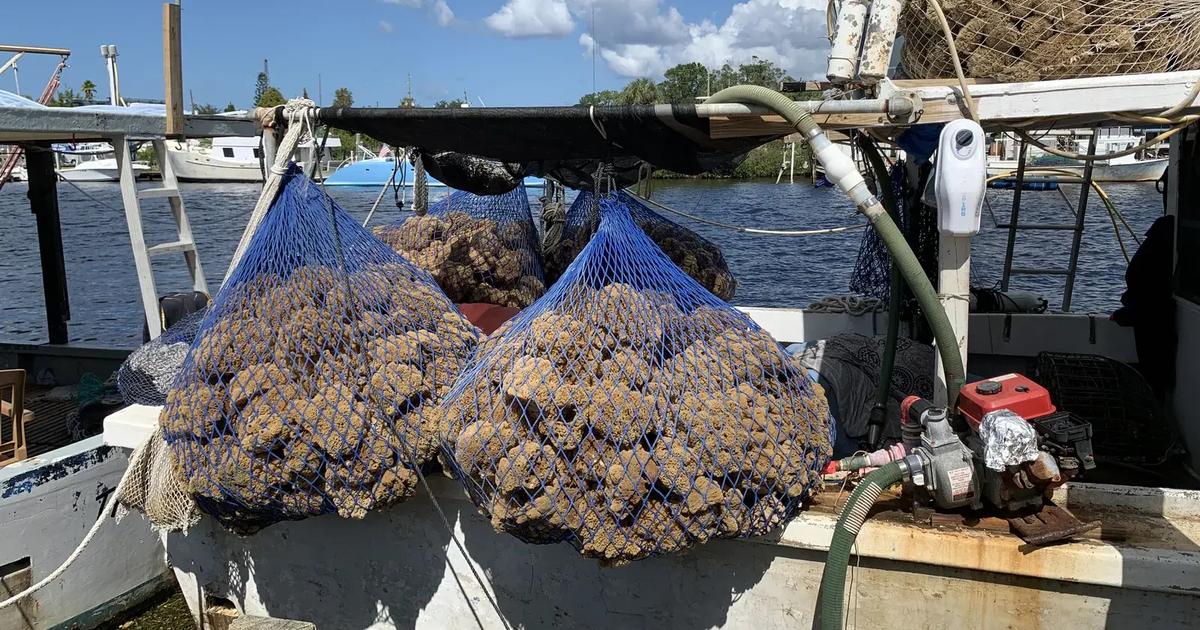
Cover photo: Sponge fishing Tarpon Springs FL by Mlongchamps, under a CC BY-SA 4.0 license. We cropped and resized it, and share the edited image under the same CC BY-SA 4.0 license.