
Can you use a 1031 exchange to sell one Pinellas short-term rental and buy another without paying tax on the gain now? Yes, if both properties are held for rent or investment and you follow the IRS steps. You must name the next property within 45 days of the sale. You must close on it within 180 days, or by your tax return due date if that comes first. A qualified intermediary has to hold the sale money the whole time. An Airbnb you also use yourself can still qualify, but your personal days have limits.
I'm the broker of Mangrove Bay Realty (BK3436609) and an Airbnb Superhost. I own six short-term and furnished rentals and live in downtown St. Petersburg. I'm not a CPA, so read this as a map for the talk with your tax adviser, not tax advice.
What this covers
- Can a vacation rental qualify for a 1031 exchange?
- How many days can you use the rental yourself?
- What are the 45-day and 180-day deadlines?
- Who holds the money between the sale and the new buy?
- What counts as like-kind for a Pinellas rental owner?
- What happens to the furniture and the bookings?
- When does part of the gain become taxable?
- What changes on the Florida side of the deal?
- How do local rental rules fit inside 45 days?
- Can you move into the replacement property later?
Can a vacation rental qualify for a 1031 exchange?
Yes. Section 1031 covers real property held for use in a trade or business or for investment. Since 2018 it covers only real property. A house or condo you rent out fits that test. The IRS says real properties are generally like-kind to each other, improved or not.
Two kinds of property are left out. A place used only as your own home does not qualify. Neither does property held mainly for sale. A beach house bought to fix up and resell fast can look like property held for sale, not for rent.
For vacation rental owners, the open question is mixed use. Some owners rent the place most of the year and spend a few weeks there themselves. The IRS addressed that in Revenue Procedure 2008-16, covered next.
How many days can you use the rental yourself?
Revenue Procedure 2008-16 sets a safe harbor. If you meet it, the IRS says it will not challenge whether the unit counts as held for investment. It applies to a "dwelling unit," which it defines as a house, apartment, condominium or similar place with sleeping space, a bathroom and a kitchen.
The test looks back two years for the property you sell and forward two years for the one you buy.
Property you sell
- Own it for at least 24 months right before the exchange.
- In each of those two years, rent it at fair rent for 14 days or more.
- In each of those two years, use it yourself no more than 14 days, or 10% of the days rented at fair rent, whichever is greater.
Property you buy
- The same three tests apply to the 24 months right after the exchange.
Source: IRS Revenue Procedure 2008-16.
A condo rented 200 nights at fair rent can have up to 20 personal days a year. One rented 100 nights gets 14.
Count personal days the way the tax code does. Under Section 280A(d)(2), a day counts as personal use if you, a co-owner or a family member uses the place for any part of it. It also counts if anyone stays for less than fair rent. That last part matters for hosts. A free week for a friend, or a deep discount for your cousin, can count against you.
As I read it, missing the safe harbor does not end the exchange by itself. You lose the IRS's promise not to challenge it, and the facts decide. Get a CPA's written view before you rely on falling short of the tests.
What are the 45-day and 180-day deadlines?
The clock starts the day you close on the sale. Both deadlines come from the statute itself.
- Day 0, the sale closes. The intermediary, not you, receives the money.
- Midnight on day 45. A signed written list of replacements goes to the intermediary or the seller.
- Day 180, or your return due date with extensions if that is earlier. You take title to a property on the list.
An example, counted the way the regulation's own example counts days: a sale that closes Feb. 1, 2027 must name replacements by March 18, 2027. The new buy must close by July 31, 2027.
The written list has to name each property by street address or legal description. IRS Publication 544 says you can name more than one property, within limits:
- Up to three properties at any price,
- Any number, if their total value is not more than double the value of what you sold, or
- Any number, if you close on at least 95% of the total value of the properties you named.
Watch the return date. If you sell in the fall, day 180 can land after your tax return is due. The deadline is whichever comes first, so you may need to file an extension to keep the full 180 days. The Treasury regulation shows this with a November sale whose exchange window closed on the return due date.
If you buy before the 45 days run out, the IRS treats that property as identified.
Who holds the money between the sale and the new buy?
A qualified intermediary. If you touch the sale money, or have the right to it, you lose the deferral. Pub 544 describes the setup. The intermediary signs a written exchange agreement with you, handles both sides of the deal, and holds the funds. The agreement must limit your right to receive, pledge or borrow against that money.
The intermediary can't be what the IRS calls a "disqualified person." That includes your agent and people related to you. It also includes anyone who worked for you as an employee, attorney, accountant, investment banker, broker or real estate agent in the two years before the sale. Pub 544 makes exceptions for services tied to the exchange itself and for routine title, escrow and bank work.
That means I can't hold your exchange money, and a CPA or attorney who worked for you in those two years can't either. Pick the intermediary before you list. The agreement has to be in place before the sale closes.
Pub 544 also warns that if an intermediary fails and you miss a deadline because of it, the gain can become taxable. Ask how the funds are held and who guarantees them.
If you want to buy the new rental before you sell the old one, that is a reverse exchange. Pub 544 covers it under "qualified exchange accommodation arrangements," where a titleholder holds one of the properties for you. It has its own written agreement and time limits.
What counts as like-kind for a Pinellas rental owner?
For real estate, like-kind is broad. These swaps generally work, based on the IRS rules above:
- A beach house in Madeira Beach for a condo in downtown St. Petersburg
- One rental condo for two smaller ones
- A Pinellas rental for rental property in another state
- Raw land held for investment for a rental house
These generally do not:
- Your own home, if you used it only to live in
- A property you hold mainly to resell
- Real property outside the United States, which the statute says is not like-kind to U.S. property
I live in downtown St. Petersburg and sell condos here, so I'll add one point on that swap. Condo rules on rentals differ by building. A monthly or seasonal lease still counts as renting under the safe harbor, so a building that requires longer leases is not out by default. Read the building's documents before you name it. My downtown St. Pete condo guide walks through what to pull.
What happens to the furniture and the bookings?
Furniture is personal property, and Section 1031 no longer covers personal property. The beds, sofas and kitchen gear in a turnkey rental are not part of the like-kind swap.
The regulations do allow some furniture to ride along without breaking the intermediary setup. The Form 8824 instructions call this "incidental personal property." It qualifies if deals like yours normally include it and its value is not more than 15% of the real property you receive. That rule protects the exchange structure. It does not make the furniture tax-free, so ask your CPA how to split the price between the house and its contents.
Bookings and deposits are a closing-statement question. Pub 544 says rent prorations, security deposits, property tax prorations and repairs shown on the closing statement are not exchange expenses. Ask your intermediary and CPA how guest deposits and future reservations will be handled before you sign. For what tends to transfer in an operating rental sale, see buying an operating Airbnb in Pinellas County.
When does part of the gain become taxable?
When you take something other than like-kind property. Pub 544 says you owe tax on the gain up to the cash and the value of other property you receive. Closing costs you pay can reduce that amount. The IRS says you can't recognize a loss on the exchange.
Pub 544 gives an example. An investor trades property worth $110,000, with an $80,000 basis, for property worth $100,000 plus $10,000 in cash. The investor pays $5,000 in exchange costs. The realized gain is $25,000, but only $5,000 is taxed now.
Debt counts too. Pub 544 counts a mortgage the buyer takes over, or one the property is sold subject to, in the amount you realize. If the new loan is smaller than the old one, ask your CPA whether the difference is taxable. My financing guide covers loan types for the replacement property.
The deferral carries forward. Pub 544 says the basis of the property you get is generally the basis of the property you gave up, adjusted for cash paid or received. If you later sell outright, the old gain comes due with the new one. IRS Topic 409 says unrecaptured section 1250 gain, the part tied to depreciation on real property, is taxed at up to 25%.
You report the exchange on Form 8824 with your return for the year you sold, even if no tax is due.
What changes on the Florida side of the deal?
Three Florida rules matter in a Pinellas exchange.
Income tax. Article VII, Section 5 of the Florida Constitution bars a state tax on residents' personal income beyond what federal law would credit. The tax you defer here is federal. If you live in another state, ask your CPA how your home state treats the sale.
Documentary stamp tax. Florida taxes deeds at 70 cents per $100 of the price under section 201.02, and the Florida Department of Revenue uses the same rate. An exchange has a sale and a buy, so expect a deed on each side. The contract decides who pays.
Property tax. A rental is not homestead. Under section 193.1554, non-homestead residential property with nine or fewer dwelling units is assessed at just value as of January 1 after a change of ownership. Section 193.1555 applies the same just-value reset to other property, including larger residential parcels. After that reset, a yearly cap limits how fast the assessed value can rise for levies other than school taxes. School taxes stay on just value. The cap is 10% through 2026. Beginning January 1, 2027, Amendment 3 lowers that cap to 5% for non-school taxes, and it first applies to the 2027 tax roll. The Florida Department of Revenue bulletin PTO 26-21, dated November 5, 2026, confirms voters approved the amendment on November 3, 2026. The exchange defers income tax. It does not carry the old assessed value to the new property, so budget the new tax bill from the price you pay. My sell-or-keep guide covers the tax side of selling.
How do local rental rules fit inside 45 days?
Forty-five days goes fast when every candidate needs a rules check. In Pinellas, each city sets its own zoning, the county sets it for unincorporated land, and each condo association adds its own rental rules. The answer can change from one town to the next.
Do this work before the sale closes, not after:
- Shortlist at least three replacements while the sale is under contract.
- Check each address against the city or county rule. The Pinellas STR zoning map lists the rule city by city.
- For condos, get the declaration, the rules and recent board minutes, and look for rental limits.
- Ask the seller which state license and tax accounts the rental runs under.
- Line up the loan so a lender delay can't push you past day 180.
The safe harbor counts rental days, not nightly stays. A replacement in a town that requires leases of 30 days or more can still be rented at fair rent. Run the income numbers on the lease length the local rule allows.
Can you move into the replacement property later?
You can, but the timing rules are strict. Under Revenue Procedure 2008-16, the safe harbor for the property you buy requires two years of rental use and limited personal days after the exchange.
The home sale exclusion has its own limit. IRS Publication 523 says you can't use the exclusion if you got the home in a like-kind exchange during the past five years. If retiring to the beach house is the long-term plan, run the numbers with your CPA before you name it in an exchange.
The reverse case also comes up. The Form 8824 instructions say Section 1031 does not apply to a place used only as your own home. But if you lived in it for two of the last five years, section 121 may let you exclude the gain in part or in full. Pub 523 covers how the two rules interact.
If you want a Pinellas address checked against the local rental rules before a 45-day clock starts, send it through the contact form.
Sources
- IRS: Like-kind exchanges, real estate tax tips, like-kind exchanges now limited to real property, Instructions for Form 8824, Publication 544, Publication 523, Topic 409, Revenue Procedure 2008-16
- U.S. Code: 26 U.S.C. 1031, 26 U.S.C. 280A
- Treasury regulation: 26 CFR 1.1031(k)-1, deferred exchanges
- Florida: Constitution, Article VII, Section 5, section 201.02 documentary stamp tax, section 193.1554 non-homestead residential assessments, section 193.1555 assessments of other property, Department of Revenue documentary stamp tax, Department of Revenue bulletin PTO 26-21 on Amendment 3
General real estate education only, not tax, legal or financial advice. Exchange rules are strict and depend on your facts. Work with a CPA, a real estate attorney and a qualified intermediary before you list. Checked 2026-11-14.
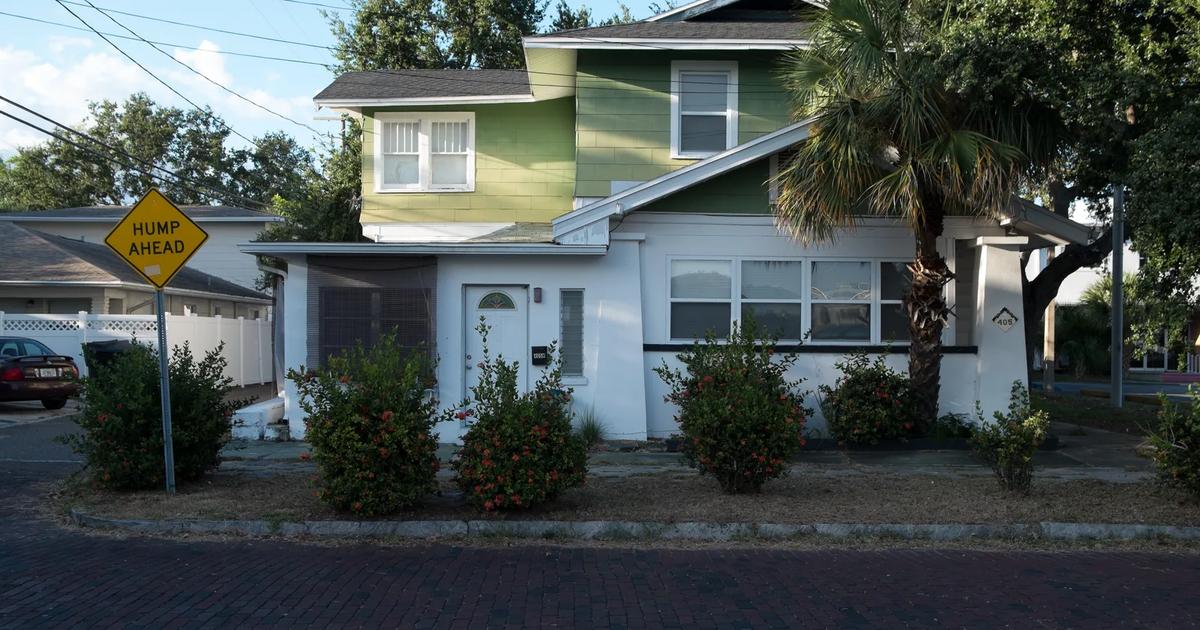
Cover photo: Historic Uptown Home, St Petersburg, Florida by pasa47, CC BY 2.0, via Wikimedia Commons. Cropped and resized.
This guide is part of the Pinellas County STR market guide and the Tampa Bay short-term rental guide.