
Quick answer: Yes. If you rent a whole Florida house or condo to guests for less than 30 consecutive days more than three times a year, you need a vacation rental license from the state's Department of Business and Professional Regulation (DBPR). You also need state sales tax and county tourist tax accounts. Then your city or county decides whether short stays are allowed on that parcel at all, and some run their own registration.
- State license: DBPR vacation rental guide
- Definition: Florida Statutes 509.013 and 509.242. Last verified Nov 19, 2026
Most buyers I talk to think of the license as the permission to run an Airbnb. It isn't. The state license says you can operate a vacation rental. Your city or county zoning says whether this address can host one. You need both, and the local answer is the one that kills deals.
I'm Troy Nowak, Broker of Mangrove Bay Realty (BK3436609). I'm an Airbnb Superhost and I own and manage six short-term and furnished rentals in Pinellas County, so I've been through every step on this page myself.
Do I need a short-term rental license in Florida?
You need a DBPR vacation rental license when all of these are true:
- You rent the whole unit: a condo or co-op unit, or a house or building with one to four units.
- Guests stay less than 30 consecutive days.
- You rent it that way more than three times in a calendar year, or you advertise it as regularly rented that way.
Stays of 30 days or more fall outside the definition. So does renting a room in a home you live in, because you aren't renting the whole unit as public lodging.
The 30-day test changed on July 1, 2025. SB 606 made state law count 30 consecutive days and dropped the old "or one calendar month" wording. Some city codes still use the older wording, Clearwater's included, so read the local rule separately.
Who regulates short-term rentals in Florida?
Four layers, and each one can stop you.
| Who | What they control | Where to start |
|---|---|---|
| DBPR Division of Hotels and Restaurants | The vacation rental license, safety rules, inspections | DBPR vacation rental guide |
| Florida Department of Revenue | State sales tax on transient rentals plus the county surtax | Florida Department of Revenue |
| County tax collector | The county tourist development tax | In Pinellas: Pinellas County Tax Collector |
| City or county government | Zoning, minimum stays, local registration | Your city, or Pinellas County STR program for unincorporated areas |
Your condo association or HOA sits on top of all four. It can be stricter than the city, but it can't make an illegal use legal.
What cities and counties can and can't do
Under Florida Statutes 509.032(7)(b), a local government can't ban vacation rentals or regulate how long or how often they're rented. Rules adopted on or before June 1, 2011 are exempt. That's why St. Petersburg and Clearwater can still limit short stays: their rules are older than the cutoff.
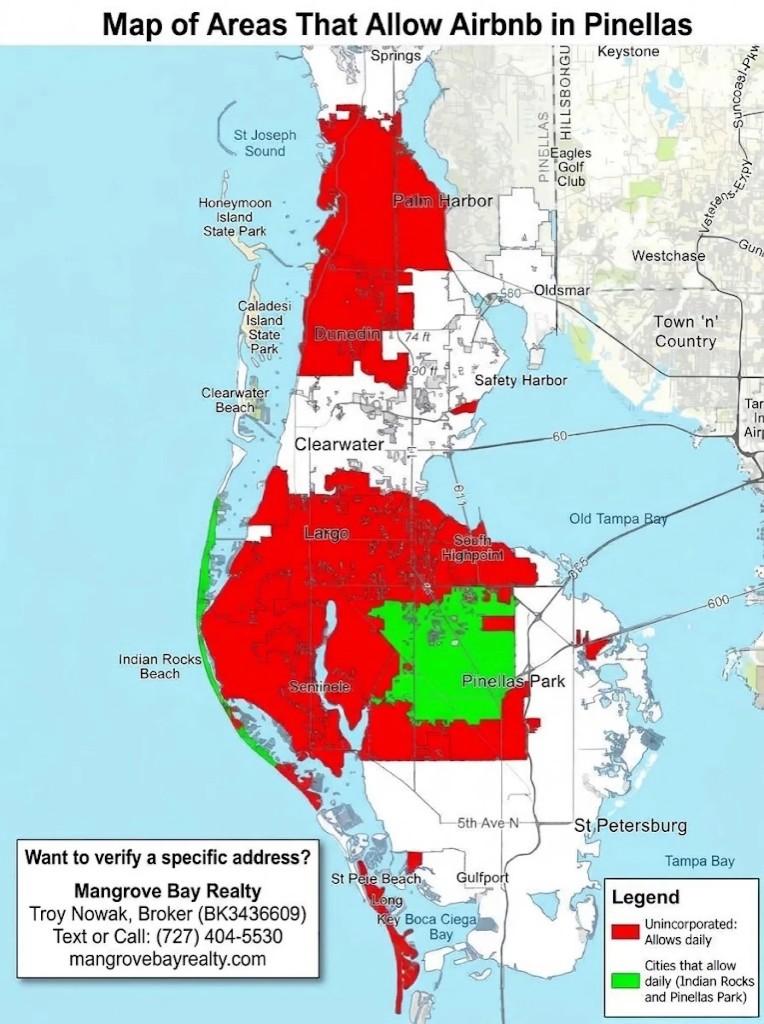
Local governments can still use zoning, safety, parking and occupancy rules, and several run registration programs. Unincorporated Pinellas requires a county Certificate of Use. The state bill that would have changed this, SB 280, was vetoed in June 2024. Vacation rental pool and water-safety bills died in the House in March 2026 (SB 658). For the local changes, read Florida STR rule changes 2025-2026.
How to get a short-term rental license in Florida
Here's the order I'd do it in. Check the local rule first, because a state license on a parcel that can't host short stays is wasted money.
- Confirm the parcel allows short stays. Find the city or county that governs the address and its zoning. For Pinellas, my Pinellas STR rules tracker lists every city with its source.
- Check the condo or HOA documents. Minimum lease term, leases per year, and any pending rental amendment.
- Apply to DBPR online. Create a DBPR Online Services account and apply for the Vacation Rental - Condominium or Vacation Rental - Dwelling class, with one address per unit. DBPR says processing usually takes one to two business days and the license comes by email.
- Register for state sales tax with the Florida Department of Revenue.
- Register for the county tourist tax. In Pinellas, the Tax Collector handles it.
- Complete any local registration, such as the county Certificate of Use and inspection in unincorporated Pinellas.
- Post the license number on your listings where the platform or local rule asks for it.
What the DBPR license costs
From the DBPR guide, checked November 19, 2026:
| Item | Fee |
|---|---|
| Application fee (new license) | $50 |
| Hospitality Education Program fee | $10 |
| License fee, 1 unit, full year | $170 ($90 for a half year) |
| License fee, 2 to 25 units, full year | $180 ($95 half year) |
| Collective license | $150 plus $10 per unit |
| Renewal | $10 plus the full-year license fee |
Pinellas is in DBPR District 3, which renews every February 1. Buildings three or more stories tall also file a balcony inspection certificate every three years.
A property manager can hold a group license for units in one complex, or a collective license for up to 75 units at separate locations in one DBPR district.
In unincorporated Pinellas, the county adds its own costs: a $450 Certificate of Use, a $150 inspection and a $450 yearly renewal, per the county STR page.
Taxes come with the license
Short-term rentals in Florida collect the state's 6% sales tax plus the county surtax, and a county tourist development tax. In Pinellas that's 13% in total: 6% state, 1% surtax and 6% tourist tax. Airbnb says it collects all three on Pinellas stays. You're still liable if a platform or manager doesn't pay. The detail, including direct bookings and cleaning fees, is in Pinellas County Airbnb taxes.
Buying a rental that already has a license?
The license doesn't come with the house. A Florida lodging license isn't transferable (Florida Statutes 509.241), and neither are the seller's tax accounts. Plan to apply in your name before your first guest. What does and doesn't move at closing is in buying an operating Airbnb in Pinellas County.
The local rule by city
The state license is the same everywhere. The local rule is not. Start with the city:
- Clearwater short-term rental rules: 31 days or one calendar month on residential zoning
- St. Pete 3-stay rule: three stays under 30 days a year inside city limits
- Unincorporated Pinellas County rules: nightly with a county Certificate of Use
- Largo, Treasure Island, St. Pete Beach, Madeira Beach, Indian Rocks Beach
- Every Pinellas city in one table: Pinellas STR rules tracker
Frequently asked questions
Do I need a license to Airbnb my house in Florida?
Yes, if you rent the whole house for less than 30 consecutive days more than three times a year. That's a vacation rental under Florida law, and it needs a DBPR license plus state and county tax accounts.
How much is a vacation rental license in Florida?
For one unit, a new license is a $50 application fee, a $10 education fee and a $170 full-year license fee, per DBPR's guide as of November 2026. Local programs can add their own fees.
How long does it take to get a Florida vacation rental license?
DBPR says online applications are usually processed in one to two business days. Local registration and inspections can take longer.
Do I need a license for a 30-day rental in Florida?
No DBPR vacation rental license is needed for stays of 30 consecutive days or more. Check your city's minimum stay and your condo or HOA rules, and note that Florida still taxes many rentals of six months or less.
Who regulates short-term rentals in Florida?
DBPR licenses them, the Department of Revenue and the county tax collector collect the taxes, and your city or county controls zoning and any local registration. Your condo or HOA can add its own limits.
Can my city ban Airbnb?
Not with a new law. Florida bars local bans and new limits on rental length or frequency, but rules adopted on or before June 1, 2011 still stand, and zoning, safety and registration rules still apply.
Send me the address before you apply
Send me the address and how you plan to rent it. I'll tell you which government controls the parcel, whether short stays are allowed there, and what licenses and registrations it needs before your first guest. Contact me here.
Troy Nowak, Broker of Mangrove Bay Realty (BK3436609)