Due Diligence
Buying a Florida Short-Term Rental From Out of State
How out-of-state buyers own a Pinellas short-term rental: your name or an LLC, Florida LLC filings, whose name goes on the license and tax accounts, remote closing and wire safety.
 Troy NowakReal Estate Broker · Mangrove Bay RealtyAirbnb Superhost · STR Specialist
Questions this page answers
- 1.Can you own a Florida short-term rental without living in Florida?
- 2.Should you buy in your own name or through an LLC?
- 3.Whose name goes on the license, certificate and tax accounts?
- 4.How does a remote closing work in Florida?
- 5.How do you protect your closing money from wire fraud?
- 6.Who is your local contact when you live out of state?
- 7.What changes on property taxes when you do not live here?
- 8.What should you line up before you make an offer?
…and 1 more section below.
Can you buy and run a Pinellas County short-term rental if you live in another state? Yes. Florida does not require you to live here to own a vacation rental, hold the state license, or close on the sale. What trips up out-of-state buyers is paperwork. You have to pick the owner name, line up the license and tax accounts in that same name, close from a distance without getting your wire stolen, and name someone local who can answer the phone at 2 a.m. Below, each step is laid out in plain terms, with the official source for each rule.
Can you own a Florida short-term rental without living in Florida?
Yes. Nothing in the state lodging law ties a vacation rental license to where the owner lives. The rule is about the property and the operator. Florida law says each public lodging establishment needs a license from the Division of Hotels and Restaurants at DBPR before it operates. A vacation rental is a condo unit, co-op unit, or house of one to four units that is rented to guests as transient lodging.
DBPR's own guide says you need that license if you rent the entire unit more than three times a calendar year for less than 30 days or one calendar month, or if you advertise it as regularly rented to guests. A typical whole-home Airbnb or Vrbo listing falls inside that line.
I'm a broker and an Airbnb Superhost, and I own and manage short-term and furnished rentals. The rest of this guide puts the steps in order.
City rules still apply on top of the state license. St. Petersburg, Clearwater, the beach towns and unincorporated Pinellas each have their own rules on where and how often you can rent. Start with the Pinellas short-term rental hub to see the rules for the city your address is in.
If you are not a U.S. citizen, ask your attorney whether Florida's foreign ownership law (Fla. Stat. 692.201 to 692.205) affects your purchase.
Should you buy in your own name or through an LLC?
Either can work. Your own name means no state business filing. An LLC means a Florida filing, a registered agent and an annual report, and an LLC from another state that owns a Florida rental must register here. Which one fits you is a question for your attorney and CPA, because it touches liability, taxes and your loan.
If you buy in your own name, the license, the county certificate and the tax accounts go in your name. You have no state business filing to keep up.
If you use an LLC formed in Florida, you file Articles of Organization with the Division of Corporations (Sunbiz). The Sunbiz fee page lists $100 to file plus $25 for the registered agent designation, so $125 total.
If you use an LLC from your home state, Florida treats it as a foreign LLC. A foreign LLC may not transact business in Florida until it gets a certificate of authority from the Department of State. Owning land by itself is not transacting business under Florida law. But the same statute says owning income-producing real property in Florida does count. A short-term rental produces income, so plan on registering the LLC here. The Sunbiz fee page lists the same $125 to register a foreign LLC. The instructions also ask for a certificate of existence from your home state dated within 90 days.
Any LLC that owns Florida rental property has to keep up three things:
- A Florida registered agent. Every Florida LLC and every registered foreign LLC must keep a registered office and registered agent in Florida at all times. The agent is a Florida resident or a company allowed to do this work here.
- An annual report every year. Reports are due between January 1 and May 1, starting the year after you file. Sunbiz lists the fee as $138.75. After May 1 there is a $400 late fee, and Sunbiz says it cannot be waived.
- Good standing. A foreign LLC that skips the certificate of authority cannot bring a lawsuit in a Florida court until it registers. The statute also sets a civil penalty for each year it operated without one.
One more thing to settle before you choose. Lenders set their own rules on whether a loan can close in an LLC's name. If you plan to finance, read how to finance a short-term rental in Pinellas and ask your lender which name the loan allows before you pick the owner name.
Whose name goes on the license, certificate and tax accounts?
Use the exact owner name on the deed for the DBPR license, the city or county certificate, and the state and county tax accounts. If an LLC owns the home, every account goes in the LLC's legal name.
The DBPR vacation rental license. Florida law says the license may not be transferred from one place or individual to another. DBPR's checklist says new owners of an existing lodging property must get their own license before they operate. If you buy a working Airbnb, the seller's license does not become yours. You apply in your name or your LLC's name. DBPR lists the $50 application fee for both new and change of owner applications. The license holder handles it through a DBPR Online account, which needs an email address.
The county or city certificate. In unincorporated Pinellas, the county issues a short-term rental Certificate of Use. The county FAQ says that certificate does not transfer, and new owners must apply within 30 days of purchase. If a company owns the home, the county asks for its active status with the Division of Corporations, with current officers or members. The person listed as owner must be one of them. If the company is based outside Florida, the county also asks for proof it is registered here as a foreign entity. Cities run their own programs, so check the one your address is in. The unincorporated Pinellas rules guide covers the county program in detail.
The tax accounts. Florida Department of Revenue asks you to register each transient rental location for sales tax. The DR-1 form asks for the legal name of the business entity and the address of each unit. In Pinellas, the Tax Collector runs the local tourist development tax. Airbnb has collected that tax on Pinellas bookings since December 1, 2015. But the Tax Collector also says the owner stays liable if a platform or agent fails to pay. See Pinellas Airbnb taxes for how the state and county taxes stack.
One way to keep the names straight:
- Deed: you, or your LLC
- DBPR license: same name as the deed
- City or county certificate: same name, with LLC records if a company owns it
- State sales tax account: same legal name
- Pinellas tourist tax account: same legal name
- Insurance and utilities: same name, if your agent allows it
If you are buying a home that already rents, a few things carry over and many do not. What transfers at closing on an operating Airbnb goes through bookings, furniture and accounts one by one.
How does a remote closing work in Florida?
You can sign without flying in. A Florida online notary can notarize your documents while you are in another state, and your title company or closing attorney sets up how you sign.
The statutes set these rules:
- The notary must be in Florida, and you do not. An online notary who is physically in Florida may notarize for you no matter where you are when you sign.
- You confirm you want Florida rules. If you are outside Florida, you are asked to confirm that you want a Florida notary to do it and that Florida law applies.
- Witnesses can be remote too. A witness who joins by video must say out loud that they live in and are physically in the United States or a U.S. territory at the time.
- The deed still needs two witnesses. Florida requires a deed to be signed in front of two witnesses. In a sale, that is the seller's signature. Your title company sets up how it happens.
Your title company or closing attorney picks the method. One may send a mobile notary to you. Another may use an online notary platform or mail you a signing package. If you have a lender, the lender has a say too, so ask whether any pages need ink signatures. Ask the title company early which way they will close, so you are not scrambling the week of closing.
How do you protect your closing money from wire fraud?
Never trust wiring instructions that arrive by email, even when the email looks like it came from your title company. Confirm them by phone, using a number you agreed on with your title company before closing.
The Consumer Financial Protection Bureau gives these steps:
- Before closing, agree with your title company on a phone number you will use to confirm wire details.
- Call that number to confirm the instructions before you send money. Do not use a number from the email.
- If you think you were scammed, call your bank right away and ask them to recall the wire.
- Report it to the FBI's Internet Crime Complaint Center at ic3.gov.
FinCEN, a Treasury bureau that tracks financial crime, studied email scams in real estate. It found the parties most often impersonated were title companies and others handling the closing. An email from your title company with new wire instructions is the classic version. Slow down when you see one.
Who is your local contact when you live out of state?
Name a responsible party who can respond to guest and neighbor issues promptly, usually a local property manager. Unincorporated Pinellas requires one, and cities set their own rules.
In unincorporated Pinellas, the posted notice at each rental must list the name, address and phone number of the responsible party. The county's checklist says that person must be available to deal with issues promptly. If your responsible party is not you, the county asks for an owner affidavit and an agent affidavit. The county also has forms to change that contact later. Cities set their own rules, so check yours.
Two more things matter when you are not here:
- Records. The Pinellas Tax Collector says tourist tax records must be kept for three years and be available for audit in Pinellas County. Your manager or bookkeeper can hold them here.
- Who can talk to the tax office. The Tax Collector needs a power of attorney form before your accountant or attorney can discuss your account.
A property manager can also hold the DBPR license as a licensed agent for a group of units, through a rental agreement with you. DBPR's guide says the licensed agent is then responsible for violations at those units. That can work well, but read the agreement carefully, and keep copies of every account in your own files.
What changes on property taxes when you do not live here?
You pay non-homestead property taxes. Florida's homestead exemption is only for people who make the home their permanent residence in Florida on January 1. A second home or a rental does not qualify.
Watch the tax bill from the year you buy. The Property Appraiser says a homestead exemption held by the prior owner is removed on December 31 after the sale. If the seller lived in the home, your first full year's bill can be much higher than the one in the listing. Have your agent and lender estimate taxes on the price you are paying, not the seller's bill.
One rule runs the other way. If the seller is a foreign person under federal tax law, the IRS says the buyer generally must withhold 15% of the amount realized under FIRPTA. The buyer can be liable if it is not withheld. Ask your title company and CPA about it if the seller lives outside the United States.
What should you line up before you make an offer?
Settle the owner name first. Everything else follows from it. Here is the order I would use from out of state:
- Pick the owner name with your attorney, CPA and lender. If it is an LLC, form or register it in Florida and name a registered agent before closing.
- Confirm the city rules for the address, and whether a short-term rental is allowed there at all.
- Get flood zone and insurance quotes for the address. Our Pinellas flood zones guide shows how to check one.
- Choose your local responsible party or property manager, and get their written agreement.
- Ask the title company how you will sign and agree on a phone number for wire checks.
- Apply for the DBPR license in the deed name before the first guest checks in.
- Register the tax accounts with the state and the Pinellas Tax Collector in that same name.
- Apply for the city or county certificate within the window your local program allows.
- Put May 1 on your calendar every year if you own through an LLC.
None of this needs you to live here. It does need you to do it in order, in one name, with someone local you trust.
Sources
All links were opened on November 2, 2026.
- Florida Statutes: 509.241 licenses, 509.242 vacation rentals, 605.0113 registered agent, 605.0902 certificate of authority, 605.0904 failure to register, 605.0905 transacting business, 117.209, 117.265 and 117.285 online notarization, 689.01 deeds, 692.201 to 692.205 foreign ownership, 196.031 homestead
- DBPR: vacation rental guide, license checklist, lodging fees
- Florida Division of Corporations: LLC fees, annual report, foreign LLC instructions
- Florida Department of Revenue: sales and use tax, Form DR-1
- Pinellas County: short-term rental program, Certificate of Use FAQs, Tax Collector tourist development tax, Property Appraiser homestead exemption
- Federal: CFPB closing scams, FinCEN real estate email compromise analysis, IRS FIRPTA withholding
General real estate education only, not legal, tax or financial advice. Laws, fees and local rules change. Have your attorney and CPA review your ownership, tax and closing plan. Checked November 2, 2026.
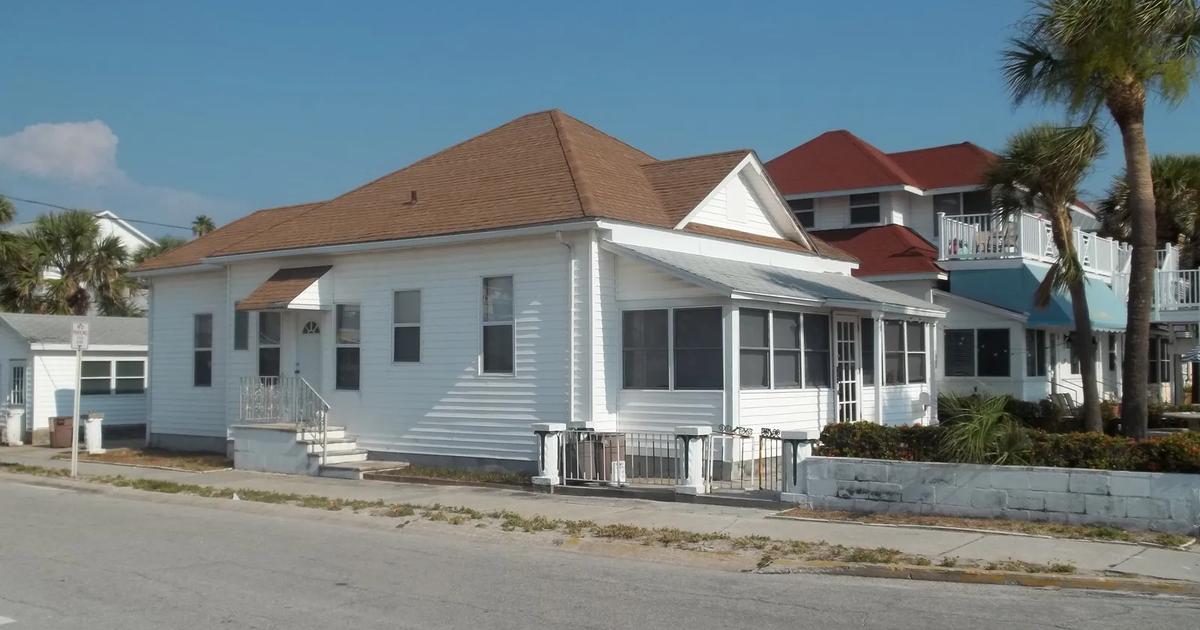
Cover photo: St Pete Beach FL Pass-a-Grille HD01 by Ebyabe, CC BY-SA 3.0, via Wikimedia Commons.

Keep exploring
Related: Short-term rentals
Top related pages in this topic, ranked by relevance and search demand.
Pinellas County Flood Zones: The Complete Guide for Rental Buyers
Check these before you buy a Pinellas rental: the FEMA flood zone, a quote for your rental use, the elevation certificate, the 49% rule and the evacuation zone.
Read articleBuying a Tampa Bay Home: Deferred Maintenance Checklist
Screen roof age, HVAC, plumbing, pool, and wind mitigation before you buy a Tampa Bay Airbnb. See how Florida insurance treats an older roof.
Read articleHow to Finance a Short-Term Rental in Pinellas County
Conventional, second-home, DSCR and cash: how each loan treats Airbnb income, why some Pinellas beach condos cannot get a regular loan, and what to line up before you offer.
Open guideIs Clearwater, FL a Good Place to Live in 2026? (A Local Broker's Guide)
Thinking of moving to Clearwater in 2026? A local broker shares the brutal truth about flood insurance, condo fees, rental rules, and where to buy.
Read article