
What we'll cover
- 1.Why a Tampa Mailing Address Does Not Mean City Limits
- 2.The Seven-Day Minimum Already Exists in Both Jurisdictions
- 3.What the County Registration Program Changes in 2027
- 4.Has Tampa Adopted the County Program?
- 5.Zoning Comparison
- 6.Business Impact for Owners and Buyers
- 7.Discuss Your Property and Strategy
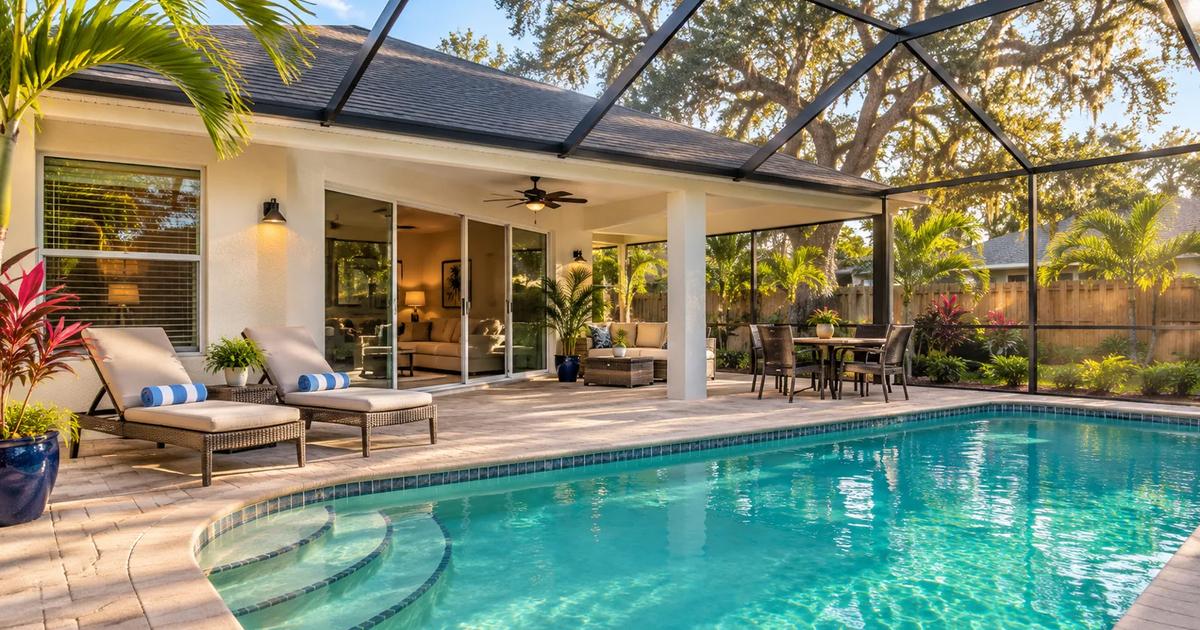
Featured image above: AI-generated illustration of a Tampa-style vacation rental home, not a photo of a specific property.
Updated: November 6, 2026
On September 2, 2026, Hillsborough County commissioners unanimously approved a short-term vacation rental registration program with a $200 annual fee per unit, as Bay News 9 reported. The Hillsborough County Board meeting recap confirms the ordinance takes effect January 1, 2027.
Here is the catch many buyers and hosts miss: the county ordinance covers only unincorporated Hillsborough County. It does not apply inside Tampa, Temple Terrace, or Plant City. Two homes ten minutes apart, both with "Tampa, FL" on the mail, can sit under different local governments and enforcement rules.
Why a Tampa Mailing Address Does Not Mean City Limits
Postal ZIP codes follow mail routes, not city borders. Neighborhoods such as Carrollwood, Westchase, Citrus Park, and Town 'n' Country use Tampa mailing addresses while sitting on unincorporated county land.
Check the parcel before relying on any rental rule:
- Search the folio on the Hillsborough County Property Appraiser site and review the tax district. A Tampa code means city rules apply; an unincorporated code means county jurisdiction.
- Check city limits, zoning, historic districts, and overlays on the City of Tampa interactive zoning maps.
- For county parcels, confirm the zoning district with Hillsborough County Development Services.
The Seven-Day Minimum Already Exists in Both Jurisdictions
The seven-day rule for ordinary homes is already in effect. Hillsborough County's September 2026 registration ordinance did not create it.
In unincorporated Hillsborough, the Land Development Code definitions define a dwelling unit as occupied by an owner or rented "on a weekly or longer basis." Nightly transient lodging falls under hotel, motel, or bed-and-breakfast uses, which the county's zoning table excludes from standard residential and agricultural districts.
Inside Tampa city limits, Section 27-43 of the zoning code uses the same "weekly or longer" standard. In a 2022 Thirteenth Judicial Circuit appellate opinion, the court upheld a city ruling that stays under seven days in RS-60 single-family zoning violated city code.
Both rules sit beside Florida Statute 509.032(7)(b), which bars local laws prohibiting vacation rentals or regulating stay duration unless adopted on or before June 1, 2011. Online code histories did not confirm whether either "weekly or longer" clause predates that cutoff, though both governments enforce their seven-day residential standards today.
Verified exceptions. Stays under seven nights are lawful only where a transient lodging use is approved for that parcel, such as an approved bed-and-breakfast or a hotel or motel in a district listing lodging. Stays of seven nights or longer remain ordinary residential use. Commercial or planned-development zoning never automatically grants nightly rental rights.
What the County Registration Program Changes in 2027
Hillsborough County adopted the measure as Ordinance No. 26-40, currently listed as adopted and awaiting codification. Official county records and Bay News 9 confirm four elements starting January 1, 2027:
- Annual registration: Each unincorporated short-term rental unit must register and renew yearly, per the county's September 2 recap.
- $200 annual fee per unit: The county's Business Impact Estimate states fees are set by board resolution at an anticipated $200 per unit yearly, plus a $50 "no-show" fee for missed inspections.
- Responsible party: Bay News 9 reports owners must name a representative to address property issues.
- Inspections: Owners must authorize inspections when Code Enforcement deems one needed, which Bay News 9 notes will run on complaints.
Not yet verified in official text: Other local press reports describe 24/7 contact availability, a one-hour response window, and guest notices on parking, trash, and noise. Because the codified text of Ordinance No. 26-40, the fee resolution, the portal launch date, any grace period, and the fine schedule were not posted on county pages as of November 6, 2026, confirm those details with Hillsborough County. Commissioners also planned a 90-day post-launch review.
Registration adds to active duties: a license from Florida DBPR's Division of Hotels and Restaurants, Florida sales tax, and Hillsborough's 6% tourist development tax.
Has Tampa Adopted the County Program?
No. As of November 6, 2026, Tampa has not adopted the county program or passed its own short-term rental registry. An August 2026 city legal memo explained Tampa would need its own ordinance. While the November 5, 2026 Tampa City Council agenda listed a legal update on the county ordinance (Item 113), the memo was not posted online and no city registry has passed. Treat a Tampa registry as possible, not current law.
Zoning Comparison
| Jurisdiction | Zoning category | Minimum stay or permitted rental use | Required approvals | Source |
|---|---|---|---|---|
| City of Tampa | RS single-family (RS-50 to RS-150) | Dwelling use, weekly or longer; nightly lodging unlisted | DBPR license and taxes for transient stays | Tampa Code 27-43, 27-156; Super Host opinion |
| City of Tampa | RM multifamily (RM-12 to RM-75) | Dwelling use, weekly or longer; B&B as special use | Special use approval for B&B; license and taxes | Tampa Code Sec. 27-156 Table 4-1 |
| City of Tampa | Commercial (CN, CG, CI) | B&B listed; hotel/motel where Table 4-1 allows; not automatic | Zoning check, site/use review as required | Tampa Code Sec. 27-156 Table 4-1 |
| City of Tampa | CBD, Channel District, Ybor, PD | Set by special district rules or PD plan, not Table 4-1 | District sign-off or PD approval | Tampa Code Sec. 27-156 |
| Unincorporated Hillsborough | Residential and agricultural | Dwelling use, weekly or longer; hotel/motel excluded | 2027 county registration, DBPR license, taxes | County LDC 12.01.00 & use table |
| Unincorporated Hillsborough | Commercial, office, and PD | Hotel/motel or B&B only where district or PD allows | Conditional use or PD approval; state/county filings | County LDC use table; site PD conditions |
Historic districts, overlays, PD stipulations, condo declarations, and HOA rules can restrict stays further than base zoning. Verify parcel-level approvals first.
Business Impact for Owners and Buyers
Below is our practical analysis of possible effects, not a guaranteed outcome.
Weekend bookings. Registration keeps the seven-day residential rule intact, yet unit tracking and complaint-based inspections make unauthorized weekend listings in residential zones easier to flag.
Management costs and local response coverage. The $200 annual fee is modest, though multi-unit hosts will feel it across portfolios. Reliable local response coverage is the bigger expense: remote owners may need a paid local contact or short-term rental property management to handle guest issues and inspections.
Compliance. Unincorporated hosts should maintain a per-unit file with the county registration, DBPR license, tax accounts, and booking logs.
Buyers evaluating rental income. Underwrite on the stay length legally allowed for that parcel, not a seller's past nightly revenue in residential zoning. Compare nearby markets in our Tampa vs. St. Petersburg short-term rental investing guide or browse Tampa Bay short-term rental investment properties.
Discuss Your Property and Strategy
Checking tax districts, base zoning, and overlays early prevents costly surprises. Reach our Tampa Bay short-term rental real estate team or contact Mangrove Bay Realty to discuss a property's location and intended rental strategy. No broker can promise legal approval, though we can help you ask the right questions before committing.
Disclaimer: This article provides general information only and is not legal, zoning, or tax advice. Local rules change, and government officials hold final authority over any parcel. Confirm details with the City of Tampa, Hillsborough County, and a Florida attorney before buying or renting.