
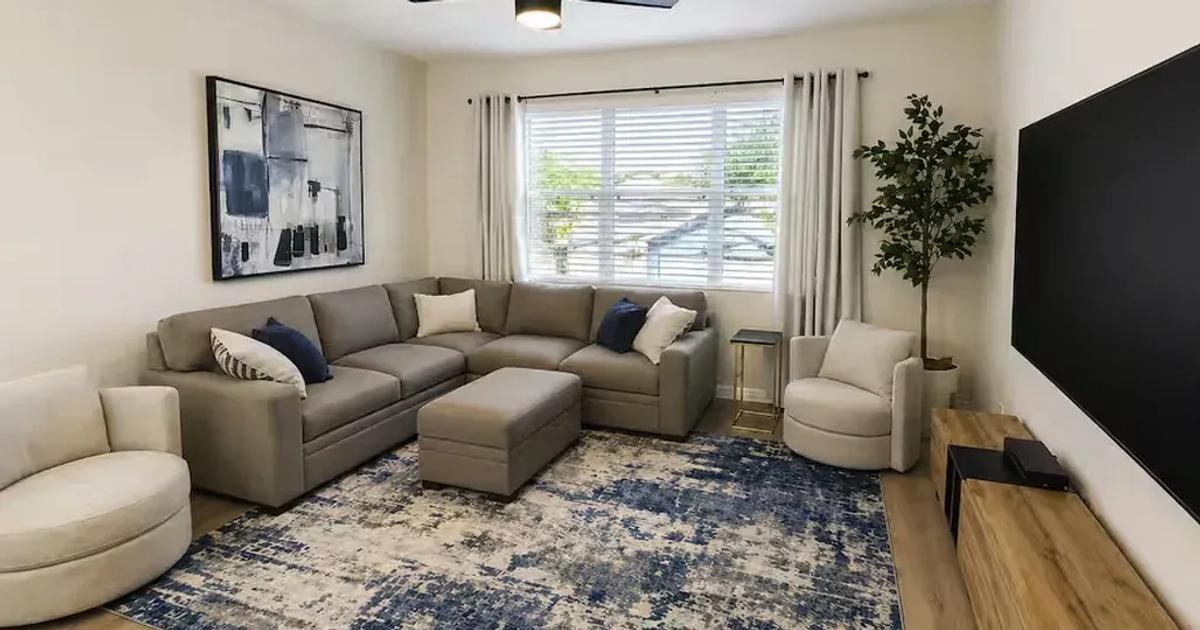
Airbnb's new host rules do not stop a host from collecting guest ID when a city requires it. The rules cover reservations booked on or after November 20, 2026, and bar ID collection in most cases, with an exception for law or a documented community association rule. The host must disclose it before booking.
I'm Troy Nowak, a Florida real estate broker (BK3436609) and Airbnb Superhost. I own and manage six short-term and furnished rentals.
What did Airbnb change for stays booked on or after November 20, 2026?
Airbnb rewrote two community policies. Its Reasonable house rules page says the policy applies to every reservation booked on or after November 20, 2026. The updated Limiting host-imposed contracts and other requirements policy covers the same bookings. Reservations made before that date stay under the older Off-Platform Policy, which is still printed at the bottom of the same page.
Under article 4168, house rules must:
- Sit in the listing's designated house rules section at the time of booking. Hosts may not add new rules after booking or in other places, and Airbnb names messages, signs in the home and in-person instructions.
- Follow Airbnb's policies. Hosts may not ask guests to sign separate contracts or hand over personal information such as a government ID, unless the law requires it or another limited exception applies.
- Be reasonable. Hosts generally may not ask guests to do cleaner work, and Airbnb names stripping the bed, taking trash offsite, and washing and putting away dishes as examples. They may not restrict an advertised feature or charge for it outside the price shown at booking. They may not fine or penalize guests.
Airbnb says it may grant exceptions based on local conditions. Its examples are shorter showers during drought water restrictions and animal-proof trash containers in bear country. If a guest breaks a house rule, or says before check-in that they plan to, the host can cancel without fees.
Under article 4169, separate contracts are allowed only when the law, a community association (such as an HOA or building security) or the host's insurer requires one, for an optional amenity such as a golf cart, for stays of 28 nights or more, or for Luxe listings. Airbnb does not require guests to sign host contracts and does not help enforce them.
For city-by-city rules, see the Pinellas STR rules tracker.
If a city requires hosts to check or record guest ID, do Airbnb's rules stop that?
No, as long as the host follows Airbnb's disclosure steps. Article 4169 bars hosts from asking for ID details or documents, such as a passport, driver's license, Social Security number or photo, at any point in the booking or stay. It then allows collection where needed to "comply with applicable law or a documented community association rule," and gives an HOA or building security requirement as examples.
When that exception applies, article 4169 sets four conditions:
- The host must clearly disclose what information guests must provide, and why, in the listing's additional rules section, so guests can see it before booking.
- The host may not collect more data than the law or rule calls for.
- The host is responsible for storing and disposing of the data securely.
- Airbnb may ask the host for evidence that the exception applies.
Airbnb's identity page, article 1237, matches this: a host may ask for a government ID after the reservation only where legal or compliance reasons require it, and only if the listing description said what was required and why when the guest booked.
With no law or HOA rule behind it, a host can still look at an ID. Article 4169 lets a host physically check a guest's ID in person at check-in to confirm identity, if the additional rules section discloses it. They may not keep a digital or physical copy.
Airbnb also verifies every booking guest itself, checking their information against trusted third-party sources or a government ID (article 1237). An unverified reservation is not confirmed. Airbnb says it does not share a guest's government ID with the host at booking, and that its process does not guarantee someone is who they claim to be.
I have not found a Pinellas city that requires hosts to collect or record guest ID. Indian Rocks Beach's ordinance does not, and neither do the Pinellas County certificate of use FAQs.
How do Airbnb's rules fit Florida law?
Two sections of Chapter 509 apply. Under Section 509.032(7), regulating public lodging, including sanitation standards and inspections, is preempted to the state, though local governments can still inspect for building and fire code compliance. A local law also "may not prohibit vacation rentals or regulate the duration or frequency of rental of vacation rentals," except laws adopted on or before June 1, 2011. Cities still adopt registration, occupancy, parking and posting rules. The Florida short-term rental license guide covers the state license.
Section 509.101 requires each transient operator to keep "a register of guests who occupy rental units," showing the dates the units were occupied and the rates charged. It may be electronic and must be open to state inspection. Operators need not produce registers more than 2 years old. The statute names dates and rates. It does not mention guest ID or addresses. Airbnb has no rule against keeping it. I could not confirm whether Airbnb's reservation records alone satisfy it.
What are the local twists in Pinellas and Tampa Bay?
| Topic | Airbnb rule | Florida / local rule | Which is stricter |
|---|---|---|---|
| Guest ID | Hosts may not collect ID unless law or a documented community association rule requires it. An in-person look at check-in is allowed if disclosed, with no copy kept (4169, 1237). | No guest ID rule found in Indian Rocks Beach, unincorporated Pinellas or the City of Sarasota. Florida's register lists dates and rates (509.101). | Airbnb, absent a local ID law. |
| House rules and guest acknowledgment | All rules in the listing before booking. No separate contracts unless required by law, an HOA, an insurer or another listed exception (4168, 4169). | Indian Rocks Beach Ordinance 2023-02, Sec. 18-206(c)(13)-(14), requires the registration to explain how each guest is "provided a copy of, and made to acknowledge," the owner's rules and the city's rules. Sec. 18-217 requires the rules to be posted inside the front door. | Unclear. Posting rules already in the listing looks consistent. Neither source says whether the city's acknowledgment needs a signature or whether Airbnb treats it as required by law. |
| Occupancy limits | "Maximum overnight guests" is a standard house rule the host sets (472). | Indian Rocks Beach Sec. 18-216: 2 per bedroom plus 2, maximum 10 (12 in the CT zone). Unincorporated Pinellas: 2 per bedroom plus 2, maximum 10, all ages. City of Sarasota: 10 in RSF zones, 12 in RMF zones, children 6 and under not counted. | Local. Airbnb leaves the number to the host. |
| Registration number in ads | Not required by any of the Airbnb pages cited here. | Indian Rocks Beach Sec. 18-214: ads must show the city registration number and match the registration, including occupancy and parking. City of Sarasota Sec. 34.5-18: listings must display the certificate of registration number. | Local. |
| Indoor cameras | No cameras or recording devices monitoring any indoor space, even if off, since April 30, 2024. Exterior cameras must be disclosed (3061). | Section 810.145 makes it a crime to secretly record a person dressing or undressing where they expect privacy, with an exemption for security systems with a conspicuously posted written notice. | Airbnb. |
| Fines | Hosts may not fine guests. They may give notice of possible HOA or government fines in the listing and request reimbursement through the Resolution Center; Airbnb does not collect or enforce these fines (4168, 4186). | Indian Rocks Beach Ordinance 2023-02 provides for fine and suspension hearings, and the magistrate may consider documentation of a platform's warnings. | Neither is simply stricter. City penalties fall on the host side, and Airbnb blocks hosts from fining guests. |
| Checkout chores | No cleaner-level tasks such as stripping beds, taking trash offsite, or washing and putting away dishes (4168). | Indian Rocks Beach code sheet: carts to the curb before 7 am and off the curb by 7 pm on pickup day. | Unclear. Airbnb allows exceptions for local conditions, but it has not said how it treats a request to roll bins to the curb. |
More detail by city: Indian Rocks Beach, Madeira Beach and Clearwater.
What should hosts and buyers do now?
- Move every house rule into the listing's house rules section. For bookings made on or after November 20, 2026, Airbnb does not allow new rules sent by message, posted on a sign in the home, or given in person.
- If a law or HOA rule requires guest information, put the requirement and the reason in the additional rules section, and collect only what that rule calls for. Keep the ordinance or HOA rule on file in case Airbnb asks.
- If you only want to see an ID at check-in, disclose it in the additional rules section and do not keep a copy.
- Remove any guest fines from your rules. List HOA or city fines in the local rules section instead.
- Match the listing's guest count, parking and registration number to the city registration where the city requires it.
- Remove any indoor camera, including one that is switched off, and disclose exterior cameras.
- Keep the Section 509.101 register of dates and rates. The statute does not require producing registers more than 2 years old.
- Buyers: check the city registration, occupancy cap and HOA rules before counting on a rental's current setup. The STR rules check is a starting point.
Not legal advice. Rules change, and an ordinance or HOA document controls over any summary.
Frequently asked questions
When do Airbnb's new host rules take effect?
They apply to reservations booked on or after November 20, 2026. Reservations booked before that date stay under Airbnb's previous Off-Platform Policy.
Can an Airbnb host ask for a copy of my driver's license?
Only if a law or a documented community association rule requires it and the listing disclosed that before you booked. Otherwise a host may check your ID in person at check-in, if the listing says so, but may not keep a copy.
Does Florida law require hosts to collect guest ID?
Section 509.101 requires a register of dates occupied and rates charged and does not mention guest ID. I found no Pinellas city that requires ID collection.
Can an Airbnb host still charge a fine for breaking house rules?
Not for reservations booked on or after November 20, 2026. A host can list fines that an HOA or local government may charge and ask the guest to reimburse one through the Resolution Center.
Questions about a specific address? Use the contact form.
Sources
- Airbnb, Reasonable house rules (article 4168)
- Airbnb, Limiting host-imposed contracts and other requirements (article 4169)
- Airbnb, Verifying your identity on Airbnb (article 1237)
- Airbnb, Restrictions on security cameras and other devices in homes (article 3061)
- Airbnb, Add house rules to your listing (article 472)
- Airbnb, Add local rules to your home listing (article 4186)
- Florida Statutes, Section 509.032 (2026)
- Florida Statutes, Section 509.101 (2026)
- Florida Statutes, Section 810.145 (2026)
- City of Indian Rocks Beach, Ordinance 2023-02
- City of Indian Rocks Beach, vacation rental code sheet
- Pinellas County, Short-term rental certificate of use FAQs
- City of Sarasota, Vacation rentals
Last verified: November 21, 2026