Last verified: October 21, 2026
Miami allows short-term rentals, but only in the right building and the right zone. In the City of Miami, single-family homes and duplexes in T3 and T4-R zones are not eligible, and a legal unit needs a Certificate of Use, a state DBPR lodging license and a Business Tax Receipt. Miami Beach bans rentals under six months and one day in all single-family homes and in many multifamily districts, while unincorporated Miami-Dade requires an annual Certificate of Use and caps guests at 2 per bedroom plus 2, up to 12.
I'm Troy Nowak, broker of Mangrove Bay Realty (BK3436609). I help investors underwrite STR deals across Florida. This guide covers the current rules in the three jurisdictions buyers mix up most (City of Miami, Miami Beach and unincorporated Miami-Dade), what 1- to 5-bedroom homes are worth versus the revenue AirROI and Rabbu report for the same bedroom count, and what to check before you offer.
Review STR Deal: Send the address and asking price and I will check the legal stay path for that property before you offer.
Why the rules create an edge in Miami
Miami is not one rulebook. The parcel decides everything. Most single-family homes in the City of Miami and every single-family home in Miami Beach are off the table for nightly use, so legal supply is concentrated in condo-hotel buildings, permitted multifamily zones and unincorporated county homes that clear the Certificate of Use. That pushes casual operators out and leaves compliant units in approved buildings with less legal competition than the raw listing counts suggest. Rabbu counts 6,023 active Miami listings as of April 27, 2026, up 122% year over year, so supply pressure is real for anyone outside an approved building.
Short-term rental rules in Miami
City of Miami. A short-term rental is a lodging use under Miami 21 zoning. A "transient" unit is one rented more than three times a year for under 30 days. Key points from the city's conversion page:
- Single-family homes and duplexes in T3 and T4-R transect zones are not eligible, based on the ruling in City of Miami v. Airbnb.
- Before operating you need a Certificate of Occupancy, a DBPR lodging license, a Certificate of Use, a Business Tax Receipt and any applicable county approvals.
- Existing condos and apartments file a Short-Term Rental/Lodging Evaluation Form certified by the association, plus an Operational Management Plan.
- If more than 25% of a building's units are used as transient lodging, the whole building must meet R-1 (hotel) building code standards.
- The Certificate of Use and Business Tax Receipt renew annually, and Code Compliance or Fire Prevention can inspect without notice.
Miami Beach. Rentals of less than six months and one day are prohibited in all single-family homes and in many multifamily buildings in certain zoning districts. Legal units need zoning approval, a Business Tax Receipt and a Resort Tax account, and every listing must show both numbers. The city publishes the list of apartment buildings authorized for short-term rental.
Unincorporated Miami-Dade County. Section 33-28 of the county code requires a Certificate of Use before you list, an inspection, and a new CU every year. Occupancy is capped at 2 persons per bedroom plus 2, up to 12, excluding children under 3. In Estate or Low Density areas, the responsible party must live in the home more than six months a year. Fines for operating without a CU are $100, then $1,000, then $2,500 for repeat offenses within 24 months.
State layer. The 2026 session did not change Florida's vacation rental framework. SB 658, a pool and water-safety bill for vacation rentals, passed the Senate 37-0 and died in the House on March 13, 2026.
Official sources: City of Miami short-term rental/lodging procedures, Miami Beach vacation/short-term rentals, Miami-Dade short-term vacation rentals. Rules change. Verify the current version and the exact parcel zoning before you offer.
Price vs revenue by bedroom (Miami)
Miami is a high-basis market, and the City of Miami numbers below hide big swings between neighborhoods. Revenue figures are trailing 12-month medians or averages from AirROI (12 months to September 2026) and Rabbu (as of April 27, 2026). Home values are the Zillow Home Value Index (ZHVI) for the City of Miami by bedroom count, September 2026. Yields are gross (revenue ÷ typical home value) and exclude operating costs, financing, insurance, HOA dues and taxes.
| Bedrooms | Typical home value (Zillow ZHVI) | AirROI median annual revenue | Rabbu avg annual revenue | Approx. gross yield |
|---|---|---|---|---|
| 1 | ~$351,100 | ~$25,900 | ~$23,300 | 6.6–7.4% |
| 2 | ~$450,900 | ~$37,700 | ~$40,300 | 8.4–8.9% |
| 3 | ~$620,600 | ~$50,100 | ~$54,400 | 8.1–8.8% |
| 4 | ~$784,900 | ~$67,900 | ~$75,400 | 8.7–9.6% |
| 5+ | ~$1,268,900 | ~$98,000 | ~$103,000 (5 bed) | 7.7–8.1% |
Sources: Zillow Research ZHVI by bedroom, City of Miami (September 2026); AirROI Miami bedroom breakdown (12 months to September 2026); Rabbu Miami averages (as of April 27, 2026). Average recent sold price by bedroom: not available from a public source we could verify, so the ZHVI typical value stands in. Update both columns monthly.
None of the five bedroom counts reaches a 20% gross yield at the city-wide typical value. At these numbers Miami is a pick-your-building market, not a buy-the-average market. Miami Beach single-family homes cannot be rented short term at all.
Seasonality
Miami peaks in late winter and spring. Rabbu reports March as the best month at $5,123 in average revenue per listing and September as the slowest at $1,437, against a 12-month average of $2,778 a month. AirROI shows the same shape: March at $5,960 and September at $2,830, with the three strongest months bringing in 31% of the year. Rabbu puts occupancy at 53% and ADR at $267. Plan for a long, soft summer and fall when you model cash flow.
Top attractions
- Miami Beach and South Beach, including Ocean Drive and the Art Deco district
- Downtown and Brickell, with Bayfront Park and the Kaseya Center
- Wynwood and the Design District
- PortMiami cruise terminals
- Little Havana and Calle Ocho
- Key Biscayne beaches and access to the Everglades
Who gets compressed and who gains the advantage
Who gets compressed: Buyers who assume a single-family home in T3 or T4-R City of Miami zoning or anywhere in Miami Beach can run nightly. Condo buyers whose association documents do not allow short-term use, or whose building is close to the 25% transient threshold. Anyone who underwrites only on March screenshots.
Who holds the edge: Units in buildings already approved for lodging, such as the condo-hotel and apartment-hotel buildings on the Miami Beach authorized list or City of Miami buildings with an active lodging CU. Unincorporated Miami-Dade homes that pass the annual CU, can use the full 12-guest cap and sit outside Estate or Low Density land use. Two- to four-bedroom units, which show the best gross yields in the table above.
Due-diligence checklist
- Confirm the jurisdiction on the Miami-Dade Property Appraiser site: City of Miami, Miami Beach, another municipality, or unincorporated county.
- Pull the zoning (Miami 21 transect, Miami Beach district or county CDMP land use) and confirm short-term or lodging use is allowed.
- For condos, get the association's written position on short-term rentals and the building's current share of transient units.
- Verify the Certificate of Use, DBPR license, Business Tax Receipt and resort or tourist tax accounts, and whether any of them transfer on sale.
- Calculate the real guest cap and parking for the jurisdiction.
- Pull flood zone, elevation and insurance quotes that disclose short-term use, and model both peak and summer months.
Official sources
- City of Miami: How to Convert to a Short-Term Rental/Lodging
- City of Miami Zoning FAQs
- City of Miami Beach: Vacation/Short-Term Rentals
- Miami-Dade County: Short-Term Vacation Rentals and Section 33-28 of the county code
- Florida Senate: CS/CS/SB 658 (2026)
Buying or selling a short-term rental in Miami? Send the address through the contact form and I'll tell you which rules control it and whether the numbers work for your strategy.
Related: Pinellas County STR Market Guide · Tampa STR market guide · Florida STR rule changes · Florida STR occupancy scarcity · Troy Nowak agent profile
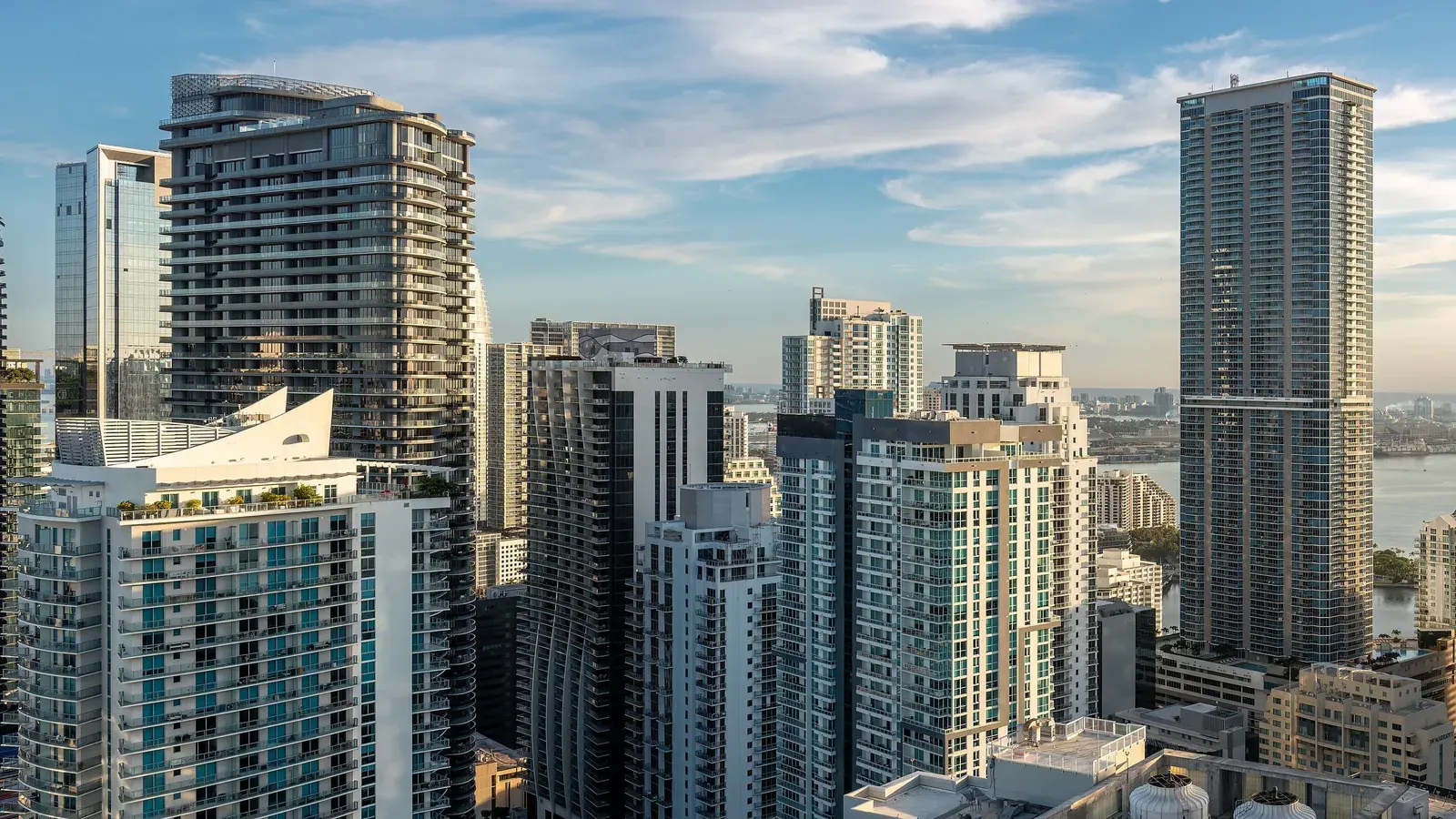
Hero photo: Brickell skyline by Rhododendrites, CC BY-SA 4.0, cropped.
Educational real estate information, not legal, tax, or insurance advice. City rules, fees, and insurance costs change. Verify the exact parcel with the city, county, state, your insurer, and your association before you buy.