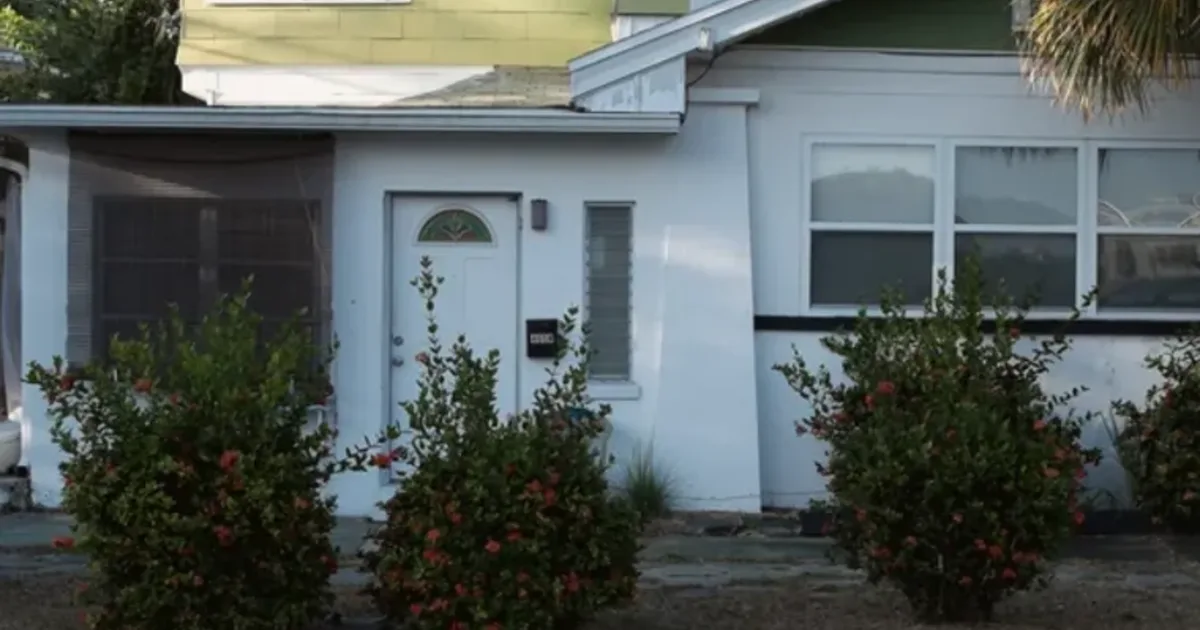
Two Wright stories sit side by side in St. Petersburg, and neither is a marketing slogan. One is Tony Jannus and the 1914 airboat line that put scheduled passenger flight on the map. The other is Frank Lloyd Wright's design language, which never put a pure Wright house on a St. Pete lot but still shows up in mid-century houses, renovations, and buyer taste.
If you are shopping or holding property here, that history is not trivia. It shows up in how blocks feel near Albert Whitted, what buyers pay for a flat-roof glass house versus a stock ranch, and which listings get design-press attention instead of pure square-footage comps.
St. Petersburg and the first commercial airline flight
On January 1, 1914, pilot Tony Jannus flew passenger Abram C. Pheil across Tampa Bay from St. Petersburg to Tampa in a Benoist XIV seaplane. The hop was about 21 miles, took about 23 minutes, and the fare was $5. That flight is widely cited as the world's first scheduled commercial airline service.[21][22][23]
It left from the waterfront that became Albert Whitted Airport. The St. Petersburg-Tampa Airboat Line ran for about four months and carried more than 1,200 passengers before it shut down.[25][27] Short run. Big story. The city still leans on that "birthplace of commercial aviation" line for good reason.
Tony Jannus, not the Wright brothers on the stick
People often blur "Wright" and "first flight" into one cloud. The Dayton Wright brothers proved powered flight earlier. Jannus is the pilot who made this bay crossing a ticketed airline trip. The Tony Jannus Award later became a national honor for people who pushed scheduled air transportation forward, and it still points back to that St. Pete start.[21][22][24]
The old flight path crossed water that now borders some of the pricier waterfront inventory in the market. That does not mean every house under a flight path is a trophy asset. It does mean the corridor carries a story buyers already half know, and agents who can tell it cleanly get further than agents who only recite bed and bath counts.[30]
Frank Lloyd Wright's design language (without a St. Pete Wright house)
Frank Lloyd Wright never built a structure in St. Petersburg itself. That fact gets lost in listicles. What you do find is Prairie School and Usonian habits filtered through Florida heat, humidity, and mid-century builders: long horizontal massing, deep overhangs, lots of glass, wood and stone, and living rooms that treat the yard as a room you can open into.[3][5][8]
Listings that made the design news cycle
A mid-century modern in St. Petersburg drew national listing attention around a $2.2M ask. The pitch leaned on classic Wright-adjacent moves: strong horizontal lines, a flat or low roof, natural materials, and a plan that treats indoor and outdoor space as one continuous living area. Floor-to-ceiling glass and post-and-beam framing showed up in the marketing for a reason. Those are the details design buyers photograph first.[5]
Another Wright-influenced house hit the news after a deep cut, including coverage around an $850K reduction. That is the other side of "architecture as product." The buyer pool is real and sometimes wealthy, but it is smaller. When pricing overshoots that pool, days on market stretch and cuts get ugly. Design pedigree helps. It does not replace comps, condition, or location.[3]
What "Wright-ish" usually means in Florida
Wright's apprentices and later Florida modernists adapted his habits to a subtropical climate rather than copying Taliesin plans line for line.[4][8][14] In the field you tend to see:
- Long, low profiles that sit with Florida's flat ground instead of fighting it with tall massing
- Wood, stone, glass, and concrete used as finish, not just structure
- Large openings, screened or covered outdoor rooms, and plans that push living toward light and breeze
- Built-ins and storage worked into walls so rooms stay cleaner visually
- Deep overhangs, cross-ventilation paths, and sometimes raised construction for storm and moisture reality
When those pieces are original and still in decent shape, the house can trade above a plain ranch of the same size on the same street. When they have been "updated" into generic builder finishes, the premium often disappears.[15]
Do design-forward homes actually trade differently?
Local agents who work architectural inventory will tell you the same pattern: documented design interest often supports a higher ask and a more patient buyer, not a guaranteed 20% lift every time. Some older write-ups float ranges like 15% to 25% faster appreciation or 20% to 40% above comps for Wright-influenced stock.[15][18] Treat those as directional marketing claims, not a formula you can plug into a spreadsheet. What holds up in practice:
- True mid-century or apprentice-attributed work with photos, plans, or press can justify a premium over cookie-cutter neighbors
- Buyer types skew toward design professionals, collectors, and people who already own modern art or furniture
- Marketing that leads with architecture (not granite and stainless) reaches that pool faster
- International Wright fame can bring out-of-market lookers, but closing still depends on Florida insurance, flood, and inspection reality
What you should underwrite before you fall for the glass wall
- Flat roofs and big glass arrays need real maintenance budgets, not HOA-level "set it and forget it"
- Insurance replacement cost can jump when materials are custom or hard to source
- Liquidity is thinner: expect longer marketing if you need a fast exit
- Provenance paperwork (architect name, original plans, renovation history) is part of the asset
- Condition of original details matters more than a new kitchen in the wrong style
If you are buying for cash-flow first, a pure design house can be the wrong tool. If you are buying a long-hold personal residence and you care how the house feels at 4 p.m. light, the premium can be rational.
Albert Whitted: aviation heritage with a real estate footprint
Albert Whitted is the downtown general aviation airport on the waterfront. It is not PIE (St. Pete-Clearwater International). Whitted is the close-in field that keeps small aircraft in the sky over the bay and keeps a large open waterfront site in aviation use.[25][28][35]
Living near the airport
Upsides people actually use:
- Private pilots and hangar users want short access
- The field locks in open space that would otherwise densify
- Visitors and business travelers who use small aircraft support nearby hotels and restaurants
- The aviation story is a legitimate neighborhood hook for tours and local branding
Tradeoffs you should price, not romanticize:
- Noise under approach and departure paths
- Height limits that constrain what can be built nearby
- Policy risk if operations ever shrink, expand, or get debated again
- Less "quiet weekend park" energy on active flight days
Homes within roughly 1 to 2 miles can see value shifts tied to flight patterns and noise, often talked about in a 5% to 10% band depending on path and buyer tolerance.[30][36] Always walk the block at different times of day before you believe a listing photo.
The 110-acre question
Whitted sits on about 110 acres of prime downtown-adjacent waterfront. That land is valuable in any reuse fantasy. Current aviation use and agreements have kept the pattern stable for nearby owners.[28][35] Stability is the underwriting assumption until city and airport policy say otherwise. Do not buy a "redevelopment lottery ticket" next door unless you have a real timeline and legal read, not a podcast rumor.
Aviation still shapes how Tampa Bay grows
The 1914 flight is the headline. The operating network is what moves money:
- Albert Whitted for downtown general aviation
- St. Pete-Clearwater International for commercial volume and regional growth pressure
- Aerospace and aviation suppliers scattered across the bay
- Local museums and exhibits that keep the first-flight story visible to visitors
Those pieces affect where infrastructure money goes, which industrial users stick around, and which residential pockets market themselves as "close to the field" versus "far from the noise."[26][29][33]
Who buys aviation-adjacent housing
- Pilots who want hangar access and short taxi time
- Frequent business travelers who mix commercial and private legs
- Investors chasing tourist demand near access points
- Operators who need industrial or service space near aviation users
Match the product to the buyer. A quiet bungalow under a busy approach is a different deal than a hangar condo product, even if both sit "near the airport" on a map.
Wright apprentices and how Florida modern spread
Several architects who trained with or around Wright practiced in Florida and carried the grammar of his work into local projects.[4][8][14] Names that show up in architectural writing include Bruce Goff and John Lautner (more famous for California work, with Florida-market ties in the broader conversation), plus regional practitioners who learned the same horizontal, site-specific habits without a famous national brand.
Their houses and the local copies show up on design tours and in press more often than a random 1970s ranch. That visibility is part of the resale story when the house is real and the docs exist.[8][9]
Field checklist: is this actually Wright-influenced?
Structure and shell:
- Post-and-beam framing
- Cantilevers or strong horizontal projections
- Flat or low-pitch roofs
- Heavy use of natural or honest materials (wood, stone, concrete, glass)
Plan and detail:
- Horizontal window bands
- Built-in furniture or continuous storage walls
- Open plans with still-readable zones
- Indoor and outdoor rooms that share floor level and sightlines
Site:
- Plan that clearly responds to this lot, not a flipped stock plan
- Planting and hardscape that feel designed with the house
- Materials that match climate (shade, drainage, corrosion)
If the listing says "Wright-inspired" and you only see shiplap and a black metal roof, ask harder questions.
How buyers actually segment this inventory
St. Pete is not one product. On the history-and-design axis you usually see:
- Homes near Whitted that sell the aviation story plus walkable downtown access
- Mid-century modern stock from the 1950s to 1970s with real horizontal DNA
- New builds that borrow Wright moves (overhangs, glass, indoor-outdoor) without the pedigree
- Waterfront houses that stack design interest on top of bay or canal frontage
Historic districts are a related but different product. A 1920s porch house in Historic Uptown sells on walkability and renovation quality. A 1960s glass-and-beam house sells on light, plan, and material honesty. They do not share the same comps or buyer lists. Mixing them in a pricing argument is how deals go sideways. Neighborhood first, then design filter; or design first and accept you may leave your original zip map.
Pricing bands you will hear (verify every time)
Older write-ups put Wright-inspired product roughly in a $400K to $2.5M+ band by size, condition, and documentation; aviation-adjacent homes sometimes carry a 5% to 15% access premium; documented design heritage is often marketed as a 20% to 40% premium over plain comps; waterfront design hybrids sit at the top.[15][18][30][36] Use those as conversation starters. Run your own comps. Insurance and elevation can erase a design premium in one renewal cycle.
How to buy or hold a design-heavy house without getting burned
Diligence that actually matters
- Confirm who designed what: name, date, plans, permits, press
- Hire an inspector who has seen flat roofs, glass curtain walls, and cantilever joints fail in Florida
- Pull flood zone, elevation certificate, and insurance quotes early (flood zones is the practical start)
- Budget specialized maintenance, not "paint every seven years"
- Compare only against other architectural sales, not the nearest three-bed ranch
How to sell one without sounding like a brochure
- Hire a photographer who understands volume, light, and material (not just wide-angle kitchen shots)
- Get on design tours and local architecture events when the house qualifies
- Pitch design press when the story is real; skip it when it is not
- Target architects, designers, and modern-furniture buyers directly
- Put a one-page provenance sheet in the listing package (architect, year, major renovations, original features still present)
What is still changing
New construction keeps borrowing Wright habits because they fit Florida living: shade, outdoor rooms, honest materials, and plans that chase breeze.[8][9][18] Preservation groups and design tours keep raising what buyers know to ask. Agents who treat a mid-century as "dated" and agents who treat it as "documented modern" will price the same house differently.
Insurance is the hard counterweight to design romance. Elevation, roof age, and opening protection matter as much as the cantilever in the listing photos. Pair any architecture search with flood and insurance quotes early. If you already own a design-forward house, keep plans, receipts, and before/after photos; that packet helps more at resale than another staged dining table.
Common questions
Are there any Frank Lloyd Wright buildings in St. Petersburg?
No pure Wright-designed buildings in St. Pete. Wright-influenced and apprentice-adjacent work exists around Tampa Bay, adapted for heat, storms, and local builders.
How do I spot a Wright-influenced home?
Horizontal massing, low or flat roofs, natural materials, large glass, built-ins, post-and-beam or cantilever moves, and a plan that ties the house to its lot. Marketing copy loves "indoor-outdoor living"; what you want is an actual door, grade, and shade strategy that works in July.
Do these homes cost more to maintain?
Often yes. Flat roofs, custom glass, and unique materials cost more to repair and insure. That cost is the price of keeping the premium.
Are they good investments?
They can be, if you buy condition and location first and design second, and if you can wait for the right buyer on exit. They are a weaker fit if you need maximum liquidity or pure rental yield.
How do I find them for sale?
Work with agents who already sell architectural inventory, watch design press and tour lists, and talk to local preservation people. MLS keyword "mid-century" alone will bury you in false positives.
What should I check before I write an offer?
Maintenance budget, insurance, resale depth, structural report, flood and elevation, and whether you actually want to live with the original design instead of gutting it.
Practical takeaway
St. Pete's Wright story is two threads: Jannus and the 1914 commercial flight at Whitted, and Frank Lloyd Wright's design grammar in Florida modern houses that never needed a Wright signature to matter. Buyers who respect both history and building science do better than buyers who treat either as a logo.
If you want architectural stock, verify the design claim, price the maintenance, and run flood and insurance early. If you want aviation adjacency, walk the noise and know which airport you are actually near.
External resources
- Florida Aviation Historical Society: aviation history and Tony Jannus documentation
- Frank Lloyd Wright Foundation: Wright work and apprentice records
- Florida Association of the American Institute of Architects: Florida architectural heritage
- St. Petersburg Museum of History: local aviation and cultural exhibits
- National Trust for Historic Preservation: preservation guidance
Related reading on this site
- St. Petersburg Real Estate 2026: Market Trends and Analysis
- Tampa Bay Luxury Waterfront Homes 2026
- Pinellas County Neighborhood Guide 2026
- Living in Tampa vs Saint Petersburg
Sources for the research set behind this piece include Creative Loafing Tampa, Mayfair International Realty, Tampa Bay Times, Florida Aviation Historical Society, Frank Lloyd Wright Foundation archives, and local architectural preservation records.
Related guides: Historic Uptown St. Pete 2026 · Top 5 Walkable Neighborhoods · Downtown St. Pete Condos 2026
St. Pete ownership and rental rules
Historic appeal can help demand, but St. Pete short-term rental rules still control what an owner can legally do. Compare any investment angle with the St. Pete Airbnb rules guide before assuming nightly rental use.
Next step: History is the fun part. The purchase still needs flood, insurance, and building reality checks on flood zones. For nearby investment filters, open the investor guide. Want help on a specific block? Contact Mangrove Bay or request a home value / CMA.