
Back to the journal
Market UpdatesUpdated

St. Petersburg Real Estate Market 2026: Prices, Townhomes, Neighborhoods, ADUs & Flood Risk

Troy Nowak, Real Estate Broker | Airbnb Investor | Property Manager | Mangrove Bay Realty
Published: June 27, 2026·Updated: June 28, 2026
18 min read
Downtown St. Petersburg skyline showing 2026 luxury condo growth and real estate development.

St. Petersburg real estate in 2026 is splitting by prices, townhomes, neighborhoods, ADU upside, and flood risk. Here is how buyers should underwrite it.

The quick take

St. Petersburg is not one simple real estate market anymore.

The lazy headline is "St. Pete is still hot." The better read is that St. Pete is splitting into multiple lanes at the same time.

Downtown luxury is still getting serious capital. Townhomes and neighborhood-specific pricing are separating faster than citywide averages suggest. ADUs and NTM-1 zoning are giving some owners real small-lot density upside. Rents are flatter than resale prices. Flood-prone neighborhoods are separating between older low-elevation homes and newer elevated rebuilds. St. Pete Beach is still desirable, but storm risk, insurance, and rebuilding rules are changing how buyers underwrite coastal property.

That is the real 2026 story.

Market segmentWhat is happeningBuyer / investor takeaway
Downtown luxuryTowers like Art House, 400 Central, Waldorf Astoria Residences, and Roche Bobois are changing the skylineWalkable, amenity-heavy, newer product has a stronger long-term story
Central Avenue / Grand CentralGrowth is concentrating around walkable corridors, transit, and mixed-use districtsBlocks near the city's preferred corridors may get more land-value support
NTM-1 / ADU lotsSelect lots can support more housing types, including ADUs and up to four units in certain casesGreat upside if the lot, parking, alley access, and zoning math actually work
Citywide rentalsRents have flattened or softened in many parts of the cityDo not assume rent growth will save a thin deal
Flood-prone areasDistressed older homes and elevated rebuilds are becoming very different productsFlood history, elevation, insurance, and substantial-damage rules matter more than ever
St. Pete BeachDemand remains, but the risk profile changed after recent stormsStrong lifestyle market, stricter underwriting

My opinion: St. Pete is still one of the best long-term real estate markets in Tampa Bay, but 2026 is not a "buy anything and wait" market. The best buys are going to be properties with walkability, zoning flexibility, resilient construction, legal rental utility, or multiple exit strategies.

1. Population and demand: St. Pete cooled, but it did not stop

The population story softened after the huge migration wave of 2020-2022.

The U.S. Census QuickFacts for St. Petersburg estimated the city at 264,033 residents in the latest annual release, down from 267,102 in the prior read. That is not a collapse, but it does show that the city is no longer in the same explosive migration phase it was in during the pandemic boom.

St. Pete Beach also showed population softness. The U.S. Census QuickFacts for St. Pete Beach estimated 8,553 residents in the latest annual release, down from 8,730 in the prior read.

That matters because demand is more selective now. Buyers still want St. Pete, but higher interest rates, higher insurance costs, higher HOA fees, storm fatigue, and more inventory have made people more careful.

The old market was simple: buy in St. Pete and assume appreciation.

The 2026 market is different: buy the right property, in the right submarket, with the right risk profile.

2. Prices and rents: values are holding better than rents

For investors, the key question is not just "Are prices up?" It is whether prices, rents, insurance, financing, and exit value still work together.

Zillow's Saint Petersburg rental market page showed average rent around the low-$2,100 range in late June 2026, with softer month-over-month and year-over-year movement. That matters because if resale prices are holding but rents are flat or falling, cash-flow math gets tighter.

A deal can still work, but it usually needs one of these advantages:

  1. You are buying below market.
  2. The property has zoning upside.
  3. You can add an ADU or another legal unit.
  4. The property can work as a furnished midterm rental.
  5. The location has walkability or downtown-adjacent demand.
  6. The property is resilient enough to avoid major insurance and flood-risk issues.
  7. You have a long-term appreciation thesis instead of needing big cash flow on day one.

This is why I am more interested in walkable infill, NTM-1 lots, ADU candidates, small multifamily, downtown-adjacent housing, and resilient properties than I am in generic homes with no upside.

If you want the broader underwriting framework, start with the Pinellas County Investor Guide.

St. Petersburg townhouse market: 2026 prices and buyer strategy

This page is already showing up for townhouse and townhome searches because many buyers want the middle ground between a downtown high-rise and an older detached house. In St. Pete, townhome pricing can swing hard based on flood zone, garage configuration, HOA structure, and whether the product feels like a primary-residence buy or a lightly disguised investor hold.

The cleaner townhome buys in 2026 usually combine three things: resilient construction, practical walkability, and monthly carrying costs that still make sense against nearby condos or single-family homes. That is why I would compare downtown-adjacent townhomes, Grand Central and EDGE-adjacent product, Crescent Lake trade-up options, and select Kenwood-edge infill differently from older attached product with weaker parking, insurance, or reserve stories.

Before you trust the asking price, check:

  • fee-simple versus condo-style ownership
  • HOA dues and reserve strength
  • flood zone and finished-floor elevation
  • garage and parking utility
  • rental minimums
  • exterior maintenance responsibility
  • and the realistic resale buyer pool

If the monthly stack looks too close to a newer condo with better amenities, the townhome premium may not hold. If the property gives you better parking, lower HOA drag, and cleaner insurance durability, it can be the better buy. For a condo comparison set, keep the Downtown St. Petersburg Condos Buyer Guide 2026 open while you underwrite.

3. Downtown luxury is no longer theoretical

Downtown St. Pete's luxury growth is real now.

For years, people talked about St. Petersburg becoming a bigger luxury market. In 2026, you can actually point to the buildings.

Art House

Art House St. Petersburg is a downtown luxury tower at 275 1st Ave S. The official site says furnished models are open daily and promotes move-in-ready inventory.

For buyers, Art House matters because it is not just another condo tower. It is part of a larger move toward high-service, amenity-heavy, luxury downtown living.

The Residences at 400 Central

The Residences at 400 Central is one of the biggest skyline changes in St. Pete. It is the 46-story mixed-use tower in the downtown core and a major signal that luxury residential demand is no longer hypothetical.

This matters because 400 Central brings a large number of high-end residents directly into the downtown grid. That supports restaurants, retail, services, and the overall walkable-core economy.

Waldorf Astoria Residences St. Petersburg

Waldorf Astoria Residences St. Petersburg is the next jump in the luxury ladder. Even before completion, the project is shaping expectations about how much capital will chase premium waterfront-adjacent product in the city.

That kind of branding changes buyer psychology. It tells the market that St. Pete is no longer just "cheaper than Tampa" or "a cute downtown by the water." At the top end, St. Pete is competing for serious wealth.

Roche Bobois St. Pete Tower

The planned Roche Bobois St. Pete Tower is another example of the city's luxury branding shift. Whether a buyer cares about designer branding or not, the bigger takeaway is clear: more capital is betting on the downtown core.

Why this matters for regular buyers: luxury growth does not automatically make every St. Pete property a winner, but it does change the market around it. More high-income residents downtown can support better restaurants, stronger retail, more services, more walkability, a higher tax base, stronger downtown branding, and more pressure on nearby underused land.

Downtown St. Petersburg condo skyline and waterfront growth in 2026

My take: Downtown luxury is bullish for the core, but it does not lift every property equally. A newer high-rise condo with views, security, amenities, and resilient construction is a totally different product than an older low-elevation house in a flood-prone neighborhood.

If condos are your lane, pair this with the Downtown St. Petersburg Condos Buyer Guide 2026.

4. What "15-minute city" really means in St. Pete

The phrase "15-minute city" gets people fired up, so let us keep it practical.

I do not see St. Petersburg branding itself around one official "15-minute city" program. But the city is clearly using many of the planning ideas behind that phrase:

In plain English, the idea is simple: more people should be able to live near daily needs without needing a car for every single trip.

That does not mean every neighborhood becomes downtown. It means the city is trying to concentrate more growth into places where walkability, transit, and existing commercial activity already make sense.

For investors, this matters because land-use policy can quietly change the value of a block.

If the city is investing in walkability, transit, streetscape, and corridor density, then the best long-term opportunities may not be the biggest houses. They may be the properties sitting in the path of future neighborhood intensity.

5. Why 1st Ave S and 1st Ave N matter

One of the most important local planning geographies is the central band around Central Avenue, especially between 1st Ave S and 1st Ave N.

That band matters because it is where St. Pete's walkability, retail, nightlife, restaurants, transit logic, and redevelopment pressure overlap.

The Grand Central District is commonly understood as the area along Central Avenue and 1st Ave N / 1st Ave S west of downtown. This is not just a vibe. It is a real investment signal.

When a corridor has restaurants, transit, bike and pedestrian improvements, older commercial buildings, lower-density parcels, and zoning attention, it becomes more likely to attract redevelopment.

That is why the Central Avenue spine keeps mattering.

For a buyer, this is the key question: are you buying a house, or are you buying a future land-use position?

Two homes can look similar on Zillow. Same bedrooms. Similar square footage. Similar year built. But if one is near a walkable corridor with zoning flexibility and the other is locked into a low-growth pocket with no rental or redevelopment angle, they are not the same investment.

My take: The city is not spreading growth evenly. It is pushing more growth into corridors and nodes where walkability, transit, and mixed-use development are easier to justify.

If walkability is part of the thesis, compare this with the Top Walkable Pinellas Neighborhoods 2026.

Best St. Petersburg neighborhoods for 2026 buyers

There is no single best St. Pete neighborhood. The better question is best for what risk profile, budget, and exit strategy.

Neighborhood laneBest forWhat to watch
Downtown / EDGEWalkability, newer condos, and high-service urban livingHOA costs, insurance, and luxury pricing
Grand Central / Central Avenue corridorRedevelopment pressure, nightlife, and mixed-use energyParking, lot constraints, and pricing momentum
Historic KenwoodCharacter housing and central locationRenovation scope, older-house systems, and insurance friction
Crescent LakePrimary-residence demand and long-term hold qualityPremium pricing and limited inventory
Disston Heights and inland west-side pocketsMore practical entry pricing and household utilityLess glamour and more block-by-block variability
Shore Acres / Venetian IslesWaterfront upside and rebuild storiesFlood exposure, claims history, and elevation math
Coquina Key and select south-side waterfront pocketsLifestyle appeal with relative value versus the core waterfrontFlood, insurance, and resale volatility

If you want more walkability context, compare this map with the Top Walkable Pinellas Neighborhoods 2026. If you are chasing coastal upside, cross-check the Pinellas County Flood Zone Guide 2026 before you assume a pretty map dot is a safe buy.

6. NTM-1 zoning: real opportunity, not magic

NTM-1 is one of the most important St. Pete zoning changes for investors and owner-occupants.

The city's Housing Opportunities for All initiative and its housing initiatives page describe NTM-1 as a zoning category created to allow a variety of housing types with up to four units on a standard lot along major corridors.

That is meaningful, but it is not magic.

NTM-1 does not mean every lot automatically becomes a profitable fourplex. Before paying extra for zoning upside, you need to check:

  • current zoning,
  • future land use,
  • lot width,
  • lot depth,
  • alley access,
  • parking,
  • setbacks,
  • tree issues,
  • utility location,
  • flood zone,
  • construction costs,
  • financing,
  • resale demand,
  • and whether the city would actually approve the plan.

A lot of people hear "up to four units" and immediately overpay. That is dangerous.

The better approach is to treat NTM-1 like an option. It can add value, but only if the lot can actually use it.

My take: NTM-1 is powerful on the right parcel and overrated on the wrong one.

If you want to compare zoning upside against the larger underwriting picture, go back to the Pinellas County Investor Guide.

7. ADUs are no longer theoretical in St. Pete

ADUs are one of the most practical ways St. Pete can add housing without turning every neighborhood into high-rise development.

An ADU, or accessory dwelling unit, is a secondary housing unit on a property. It could be a garage apartment, backyard cottage, attached unit, converted structure, or detached unit depending on the site and code.

The city's Accessory Dwelling Units page says owner-occupants can create a separate rental unit within their home, as an addition, or in a separate building on the property. The city also says ADU eligibility expanded in July 2022, and owners can verify eligibility through the city's ADU map or parcel review tools.

A few practical ADU rules from the city page:

  • ADUs must be permitted and inspected.
  • ADUs must comply with building and zoning codes.
  • A full ADU includes a bathroom and kitchen.
  • An extra parking space may be required.
  • The maximum unit size is 800 square feet or 67% of the existing home, whichever is less.
  • In residential districts, rentals under 30 days are tightly limited.
  • In flood zones, new buildings must be elevated, and major remodeling is constrained by flood-compliance rules.

For homeowners, an ADU can create rental income, guest space, multigenerational housing, caregiver housing, resale appeal, or a way to offset rising ownership costs.

For investors, an ADU can change the entire deal. A property that looks weak as one long-term rental may look much better if it can legally support a second unit. But you need to verify the rules before you buy.

My ADU checklist:

  1. Is the property inside the City of St. Petersburg?
  2. Is the lot eligible for an ADU?
  3. Is the lot large enough?
  4. Is there alley access?
  5. Is parking required?
  6. Is the property in a flood zone?
  7. Will utilities support the added unit?
  8. What is the likely build cost?
  9. Is the income worth the cost?
  10. Can the property still work if the ADU takes longer or costs more than expected?

My take: ADUs are one of the best long-term tools for St. Pete owners, but they should be treated like a real development project, not a weekend side project.

For buyers who want rental flexibility, pair this with the Short-Term Rentals in Pinellas County map and the St. Pete Airbnb rules page.

8. Flood zones are creating a bifurcated market

Flood-prone neighborhoods are the easiest part of the St. Pete market to misunderstand.

The market is not simply good or bad. It is splitting.

The real divide is:

  1. older low-elevation homes with insurance, repair, and substantial-damage risk, versus
  2. elevated, newer, code-compliant, more resilient homes.

Shore Acres is the best example.

After Hurricanes Helene and Milton, many buyers started looking at flood-prone neighborhoods differently. At the same time, some investors saw opportunity in damaged homes, land value, rebuild potential, and elevated new construction.

That can create what looks like contradictory data. A neighborhood can have damaged homes selling at discounts and still have selected high-end rebuilds pulling up median sale prices. Both can be true.

Here is how that happens:

  • older homes flood,
  • repair costs trigger substantial-damage concerns,
  • some owners sell instead of rebuilding,
  • investors buy damaged properties,
  • older homes become teardown or land-value plays,
  • new elevated homes are built,
  • and the newer homes sell at much higher prices than the damaged homes.

That is why average or median price data does not tell the whole story in flood zones anymore.

Use the FEMA Flood Map Service Center and Pinellas County flood information early. For a buyer-facing local guide, compare the parcel against the Pinellas County Flood Zone Guide 2026 and the live flood-zones page.

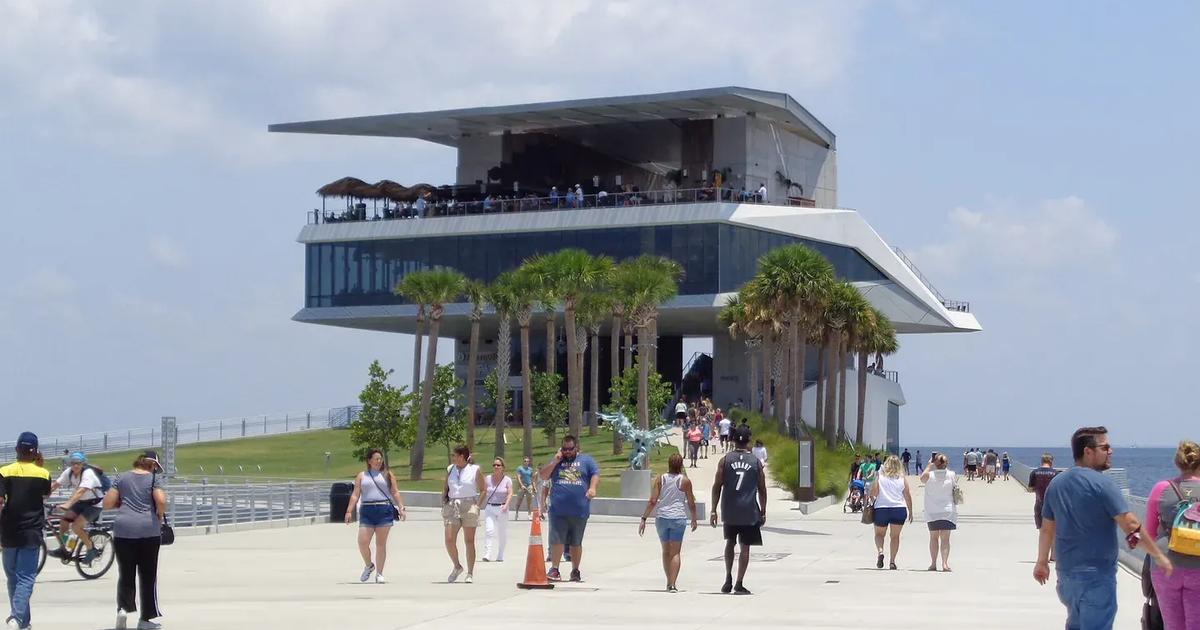
St. Petersburg post-storm resilience and rebuilding pressure along waterfront markets

Before buying in Shore Acres, Riviera Bay, Venetian Isles, Coquina Key, Snell Isle, parts of St. Pete Beach, or any low-elevation area, I would check:

  • flood zone,
  • base flood elevation,
  • finished-floor elevation,
  • insurance estimate,
  • claims history if available,
  • 4-point condition,
  • wind mitigation,
  • roof age,
  • electrical age,
  • HVAC age,
  • plumbing age,
  • substantial-damage risk,
  • elevation feasibility,
  • and the realistic resale buyer pool.

My take: I am not anti-flood-zone. I am anti-bad-underwriting.

A low-elevation home can still be a good buy if the price, elevation plan, insurance, and exit strategy make sense. But you cannot analyze it like a normal inland home.

9. What St. Pete Beach looks like after the storms

St. Pete Beach is still one of the most desirable lifestyle markets in Pinellas County.

But it is also one of the places where buyers are asking harder questions.

The U.S. Census QuickFacts for St. Pete Beach showed a smaller resident estimate in the latest annual release, and storm recovery has made insurance, repairs, condo reserves, elevation, and rental rules more important.

For investors, St. Pete Beach can still have strong demand because of tourism, beach access, limited coastal land, snowbird demand, second-home demand, furnished rental demand, and long-term lifestyle appeal.

But buyers need to underwrite it differently than they did five years ago.

You need to look at:

  • flood elevation,
  • storm history,
  • insurance,
  • condo reserves,
  • HOA rules,
  • special assessments,
  • rental minimums,
  • local short-term rental rules,
  • parking,
  • building age,
  • and whether the property can survive a conservative rental strategy.

My take: St. Pete Beach is not dead. It is just less forgiving. Good property can still win. Bad underwriting gets punished faster.

For coastal buyers, the Short-Term Rentals in Pinellas County map and the Short-Term Rental Management page help separate lifestyle buys from operating businesses.

10. What this means for short-term rental and midterm rental investors

For Airbnb and furnished rental investors, St. Pete is both better and harder in 2026.

Better because demand is real. People still come here for downtown, beaches, events, hospitals, relocation, remote work, family visits, boating, restaurants, and lifestyle.

Harder because rules, insurance, flood risk, HOA restrictions, and financing can kill a deal.

Inside the City of St. Petersburg, residential short-term rentals are limited. The city's ADU page makes clear that buyers should not assume an ADU or house lot can automatically operate like a daily Airbnb.

That is why investors need to know the difference between:

  • daily Airbnb,
  • 30-day furnished rental,
  • seasonal rental,
  • midterm rental,
  • long-term rental,
  • legal nonconforming use,
  • hotel or motel use,
  • and condo or HOA restrictions.

The best furnished rental properties usually have multiple exits.

A property is stronger if it can work as:

  1. a legal short-term rental if allowed,
  2. a 30-day furnished rental,
  3. a long-term rental,
  4. an owner-occupied house hack,
  5. a future ADU property,
  6. or a resale play in a walkable growth corridor.

My take: The best St. Pete investment properties in 2026 are not just "good Airbnbs." They are flexible real estate.

If you are underwriting furnished rental demand, compare the St. Pete Airbnb rules page, the countywide Short-Term Rentals in Pinellas County map, and the Short-Term Rental Management page.

11. The balanced investor view

Here is the mistake I would avoid: assuming every trend is bullish.

Downtown luxury is bullish for the core, but it also adds supply and gives buyers more options.

NTM-1 is bullish for some lots, but not every lot pencils.

ADUs are useful, but build costs, parking, flood elevation, and permitting still matter.

SunRunner and corridor planning are good for walkable areas, but not every block near transit becomes a redevelopment winner.

Flood-prone neighborhoods may see high-end rebuilds, but older low-elevation homes can face real discounting, insurance pain, and repair limits.

St. Pete Beach still has demand, but coastal ownership is more complicated after recent storms.

That is the real market.

It is not all good. It is not all bad. It is more specific.

The best properties have at least one durable advantage:

  • walkability,
  • flood resilience,
  • zoning flexibility,
  • ADU potential,
  • strong rental legality,
  • good insurance profile,
  • newer construction,
  • strong condo reserves,
  • or long-term land-value support.

The weakest properties usually have the opposite:

  • low elevation,
  • older systems,
  • unclear rental legality,
  • weak insurance profile,
  • high HOA risk,
  • no zoning upside,
  • no walkability,
  • and no easy exit strategy.

My expert take: where St. Pete goes from here

My bet is that St. Pete keeps growing in value long term, but not evenly.

Downtown will keep moving more upscale. The best buildings will compete for wealthier buyers who want walkability, views, amenities, security, and newer construction.

Central Avenue, Grand Central, the EDGE District, the Warehouse Arts District, and SunRunner-influenced corridors should keep attracting attention because that is where city planning, transit logic, restaurants, and redevelopment pressure overlap.

NTM-1 and ADUs will keep becoming part of the normal buyer conversation. They will not solve affordability by themselves, but they do give certain property owners more options.

Flood-prone neighborhoods will not all collapse. Some will rebuild stronger and more expensive. But the spread between obsolete low-elevation homes and elevated, code-compliant homes is going to widen.

That is the big point.

The St. Pete market is not just old versus new anymore. It is resilient versus non-resilient. Flexible versus locked-in. Walkable versus car-dependent. Zoned-for-upside versus stuck-as-is.

If you are buying in St. Pete in 2026, do not just ask what the property is worth today. Ask what the block is becoming.

Quick buyer checklist for St. Pete in 2026

Before buying, verify:

  1. Current zoning
  2. Future land use
  3. ADU eligibility
  4. NTM-1 or corridor potential
  5. Flood zone
  6. Finished-floor elevation
  7. Insurance estimate
  8. Roof, HVAC, electrical, and plumbing age
  9. HOA rules and reserves if condo or townhome
  10. Rental minimums
  11. Parking
  12. Walkability
  13. Nearby development pipeline
  14. Exit strategy if rents stay flat
  15. Whether the deal still works without optimistic appreciation

This is the checklist I would use before getting excited about any St. Pete investment property.

What I would verify on a real St. Pete address

If you are comparing St. Pete homes, condos, townhomes, ADU candidates, or furnished-rental properties, check the zoning, flood risk, insurance stack, reserve story, and rental rules before you get attached to the property.

That is where expensive mistakes usually show up first.

FAQs

Is St. Petersburg real estate still a good investment in 2026?

Yes, but the market is more selective than it was during the pandemic boom. The best opportunities usually have walkability, zoning upside, ADU potential, resilient construction, legal rental utility, or multiple exit strategies. Generic properties with flat rents, high insurance, or no value-add angle are harder to justify.

What is NTM-1 zoning in St. Petersburg?

NTM-1 is a St. Petersburg zoning category created to allow more missing-middle housing on certain lots along major corridors. The city describes it as allowing a variety of housing types with up to four units on a standard lot in eligible areas. Buyers should verify zoning, lot size, parking, alley access, setbacks, and flood zone before assuming redevelopment is possible.

Are ADUs allowed in St. Petersburg?

ADUs are allowed in many situations, but eligibility depends on zoning, lot size, parking, utilities, flood zone, and other development standards. The City of St. Petersburg provides an ADU map lookup tool and says owners can contact the city to verify whether a parcel qualifies.

Can I Airbnb an ADU in St. Petersburg?

Do not assume it. In residential districts, the city's ADU guidance makes clear that buyers need to verify short-term-rental limits before underwriting daily Airbnb income. In many neighborhoods, a 30-day furnished rental strategy is more realistic than a true nightly-rental plan.

What does "15-minute city" mean for St. Pete real estate?

St. Pete does not need to use the exact "15-minute city" label for the idea to matter. The city's planning direction supports more walkable, mixed-use, transit-connected corridors where daily needs are closer together. For real estate, that can increase attention around Central Avenue, Grand Central, downtown, and SunRunner-influenced areas.

Why do 1st Ave S and 1st Ave N matter?

The area around Central Avenue between 1st Ave S and 1st Ave N is one of St. Pete's most important walkable corridor zones. It connects downtown, Grand Central, retail, nightlife, transit, and redevelopment pressure. Properties near this band may benefit from stronger long-term land-use demand, but each parcel still needs site-specific zoning review.

Is Shore Acres still a good place to buy?

Shore Acres can still be a good place to buy for the right property and buyer, but flood risk has to be underwritten carefully. Older low-elevation homes and elevated rebuilt homes are becoming very different products. Buyers should review flood zone, elevation, insurance, claims history, repair limits, and substantial-damage risk before making an offer.

Are St. Pete Beach properties still attractive after recent storms?

Yes. St. Pete Beach remains attractive because of beach access, tourism, lifestyle demand, and limited coastal land. But buyers need to be more careful about insurance, flood elevation, HOA reserves, storm history, rental restrictions, and rebuilding costs.

About the author

Troy Nowak
Troy Nowak

Broker Associate · Mangrove Bay Realty

Troy Nowak is a Broker Associate at Mangrove Bay Realty and a licensed Florida real estate broker. He owns and manages STR and furnished rentals in Pinellas County, has Airbnb Superhost/operator experience, and brings former institutional acquisition experience to local buyer and seller decisions. Before real estate, Troy spent a decade as a Pinellas County math teacher and the head varsity basketball coach at Dunedin High, so he knows the neighborhoods, school zones, and what makes Pinellas tick from a lived-in angle. 325+ closings since 2019, average $523K, every range from first-time buyers at $117K to luxury waterfront at $1.9M.

Broker Associate at Mangrove Bay Realty300+ homes sold in Tampa BayOwns and manages STR and furnished rentalsPinellas County rental ownerAirbnb Superhost/operator experienceFormer institutional acquisition experience
View full bio

Florida Licensed Broker · #BK3436609

Topics in this article

st petersburgreal estate trendsmarket analysisaduntm-1investment

Keep reading

More from the journal